How to make money from painting
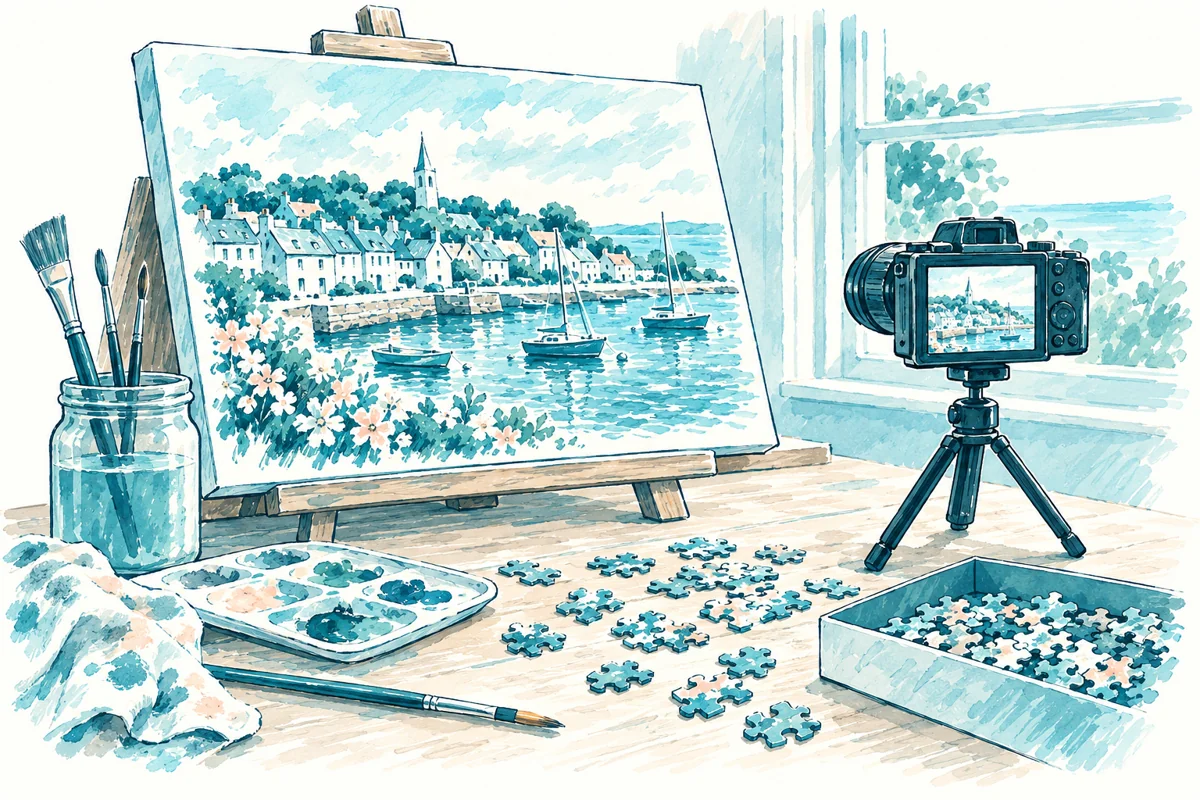
Could your artwork become a jigsaw puzzle?
Not every painting makes a good puzzle. Here’s what to consider before approaching a publisher.
With over 20 years of experience as a former Director of Product Development at Gibsons, I have worked with dozens of talented artists, including introducing Janice Daughters below, and developed hundreds of successful puzzles.

“I had always fancied having a go at illustrating jigsaws but never in my wildest dreams did I think it would be possible. We arranged a meeting at Gibsons stand the following day, and as they say, the rest is history. One of the best days of my life.”
What makes a painting work as a puzzle?
Details to discover
Give puzzlers something to look for as the picture comes together: people, objects and little stories. My Waterloo Station article shows how much there can be to discover in one picture.
Variety across the picture
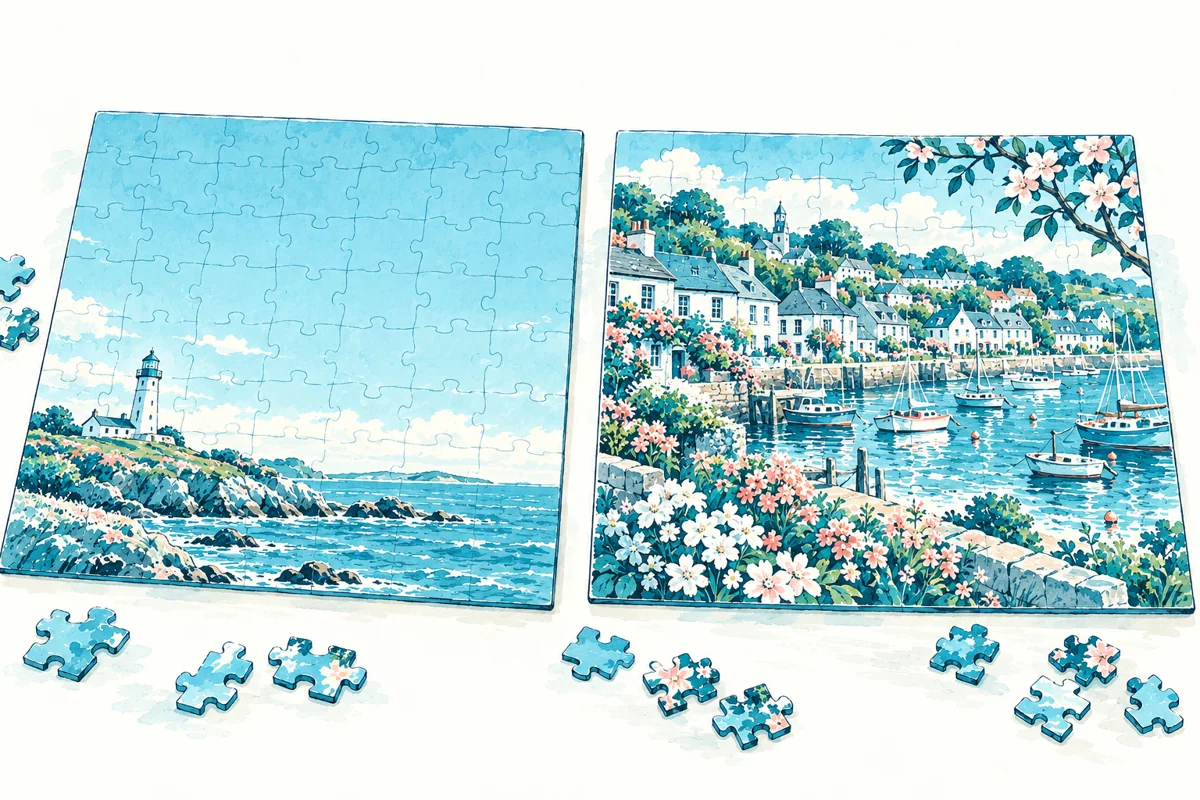
Too much plain blue sky or grass can make a puzzle difficult. Look at how colour, texture and recognisable details are spread across your painting. A lovely painting doesn’t automatically make an enjoyable puzzle!
A suitable audience
Look through a publisher’s existing range. Does your work suit the subjects and styles they choose? There are very different approaches to puzzle artwork, so take time to find a good fit.
Explore some different puzzle artists
Explore work by Trevor Mitchell, Janice Daughters, Steve Crisp and Matthew Emeny. Compare their subjects and styles with Thomas Kinkade, Colin Thompson, Charles Wysocki and Jan van Haasteren.
How to approach a puzzle publisher
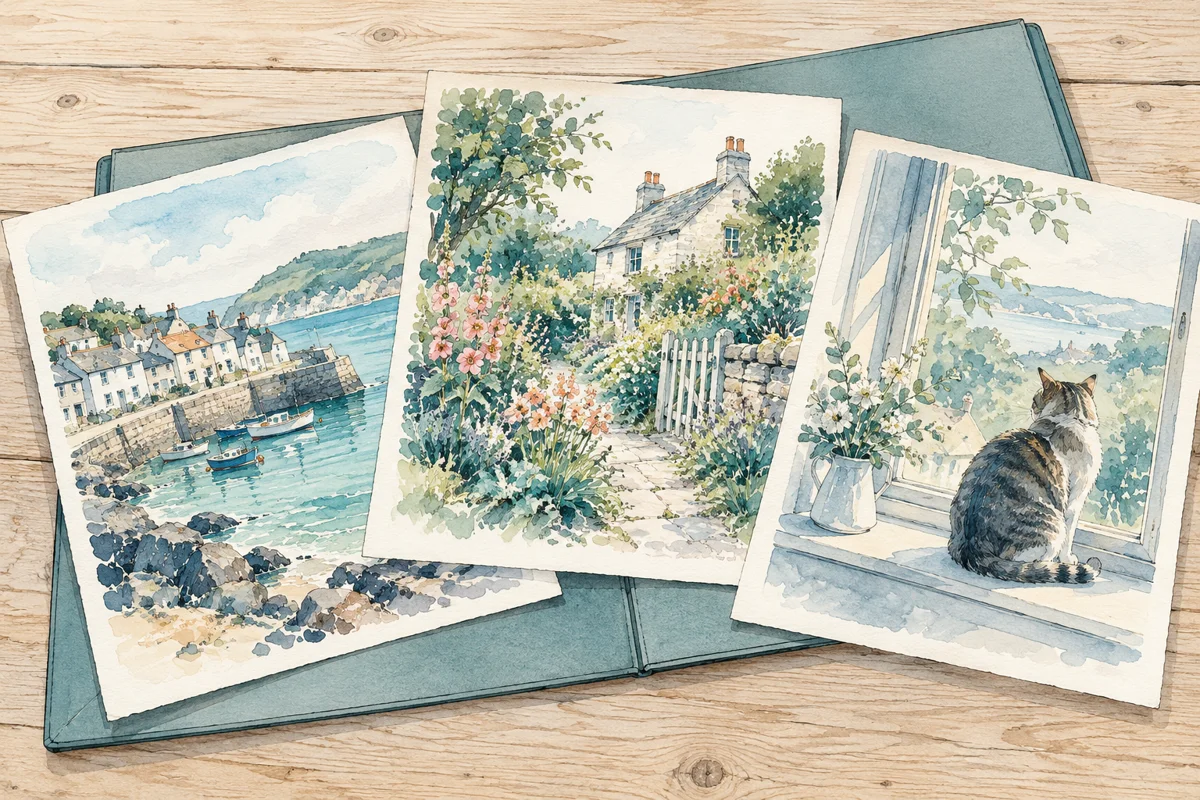
I know how hard it is to become a successful jigsaw puzzle artist. Getting noticed takes time, persistence and an understanding of what a company’s art buyers are looking for.
Choose a small, relevant portfolio.
Show the work that best fits the kind of puzzles you hope to illustrate. Make the images clear enough for the company to see the detail.
Read the publisher’s submission guidance.
Check whether submissions are open and how the company wants to receive them. Follow its requested format and number of images. For example, Gibsons has a product-idea page with its current instructions.
Let your painting do the talking.
“A painting is worth a thousand words” is very true for puzzle licensing! Keep your introduction short and show your artwork in the format the company requests.
Wait until the company likes your painting.
Don’t ask about terms in your first approach. Once the company is interested in your painting, you can discuss the terms.

“From 2004 to 2022, my primary contact and collaborator at Gibsons was Geoff Lee. Geoff is immensely likeable, and I always really appreciated his input in creating all those 4 puzzle box sets over the years.”
Why a puzzle can be a lovely showcase for your art
Puzzlers spend time looking closely at the picture. My article on how long jigsaw puzzles take gives an idea of how long that can be!
A puzzle box can introduce your work to people who might never visit your exhibition or website. Artist credits and information on the box vary, so don’t assume every publisher will include your biography or website.
Finished puzzles can be swapped or donated and become a mini travelling art gallery. I saw puzzles being shared at the jigsaw festival in Newmarket when I was at Gibsons.
Other ways to earn from your paintings
Puzzle licensing is one possibility. Here are a few other ways to sell or share your work.
Original paintings & commissions
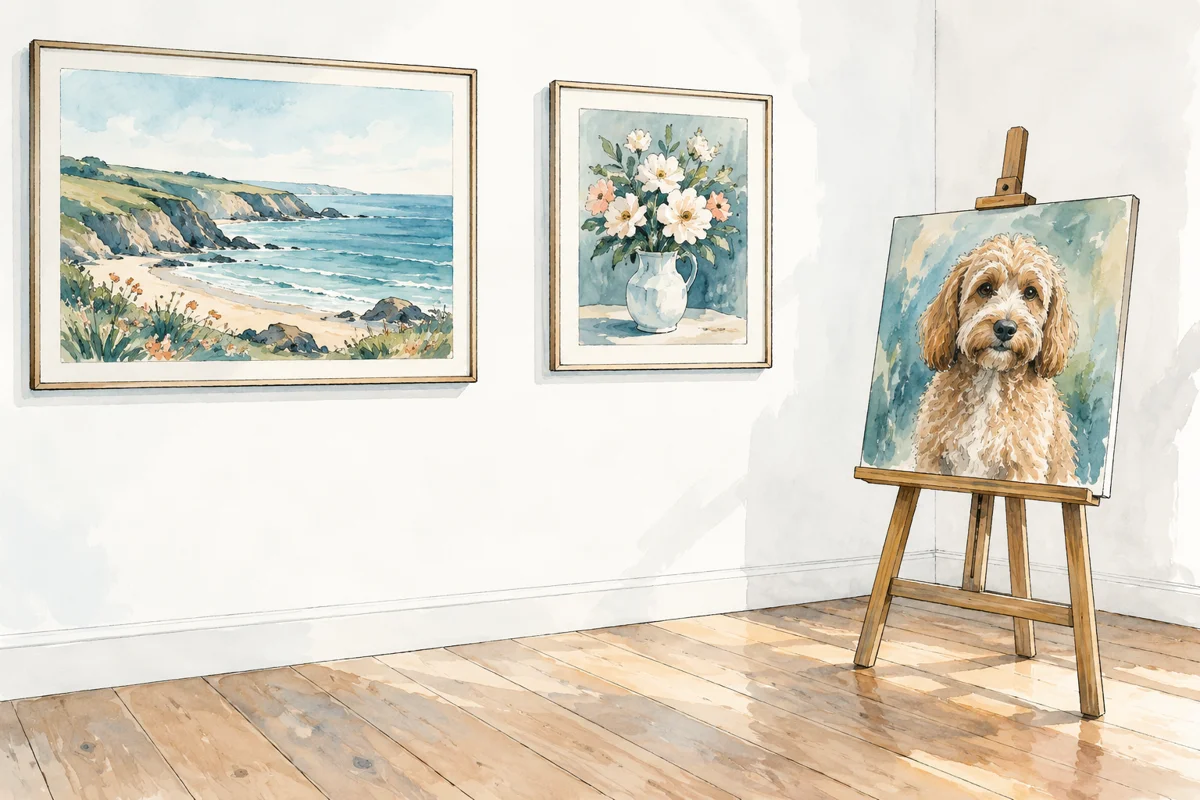
Somebody sees your original art in a gallery or art fair and wants to buy it for their wall. Or somebody asks you to paint a portrait of them or their cockapoo!
There are also ‘non-galleries’, such as hotels and coffee shops, that display paintings for sale. I was surprised and impressed to see actual paintings in the breakfast room of a country hotel we stayed at. A couple of buyers had even mentioned the artist in their TripAdvisor reviews.
Do leave your name on the painting, though, so people can search for you. You could ask a local hotel or restaurant owner whether they would like to see your portfolio, then agree how any display and sales would work.
Prints & print-on-demand products
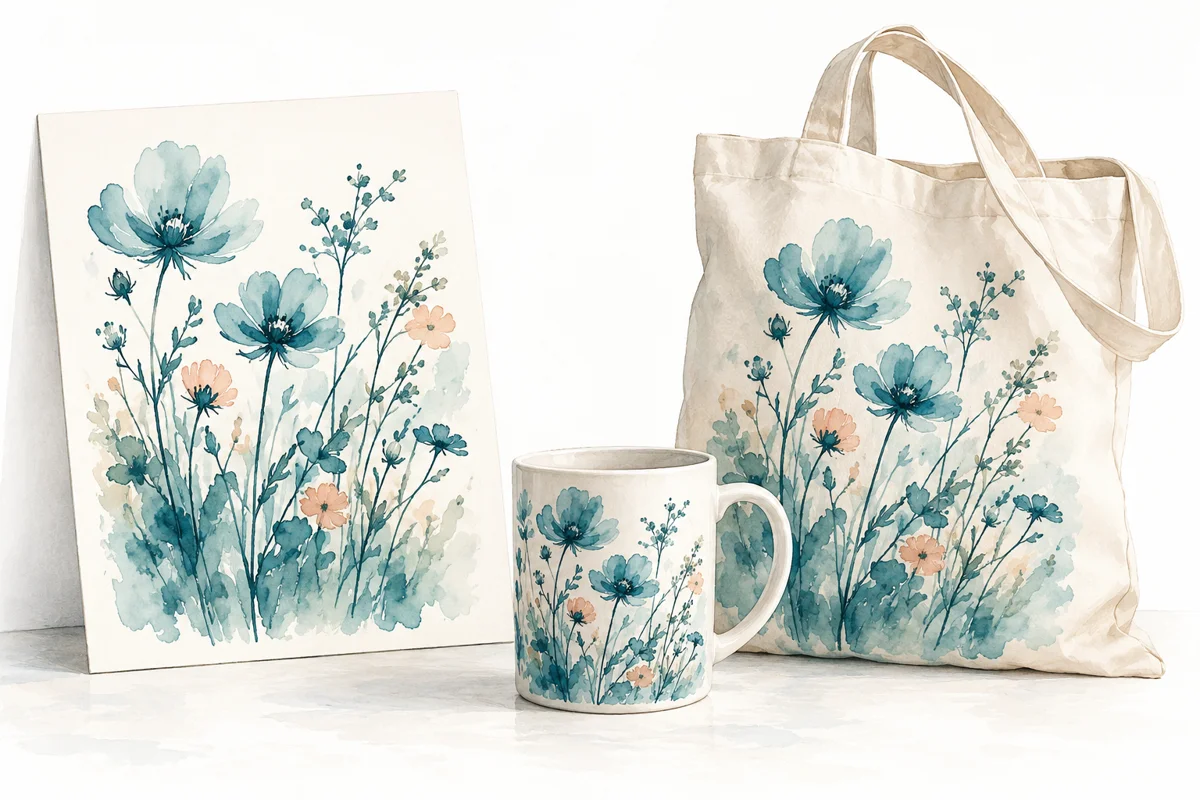
Print-on-demand companies make products when orders arrive, rather than requiring you to buy a batch of finished stock. The arrangements differ: some provide a marketplace, while others fulfil orders for your own shop.
Check who takes the customer’s payment, who pays for production and delivery, and who deals with customer questions and returns. With a connected Printful store, for example, the customer pays your shop and Printful separately charges you for fulfilment. Printful explains the payment process here.
An artist website & online marketplaces
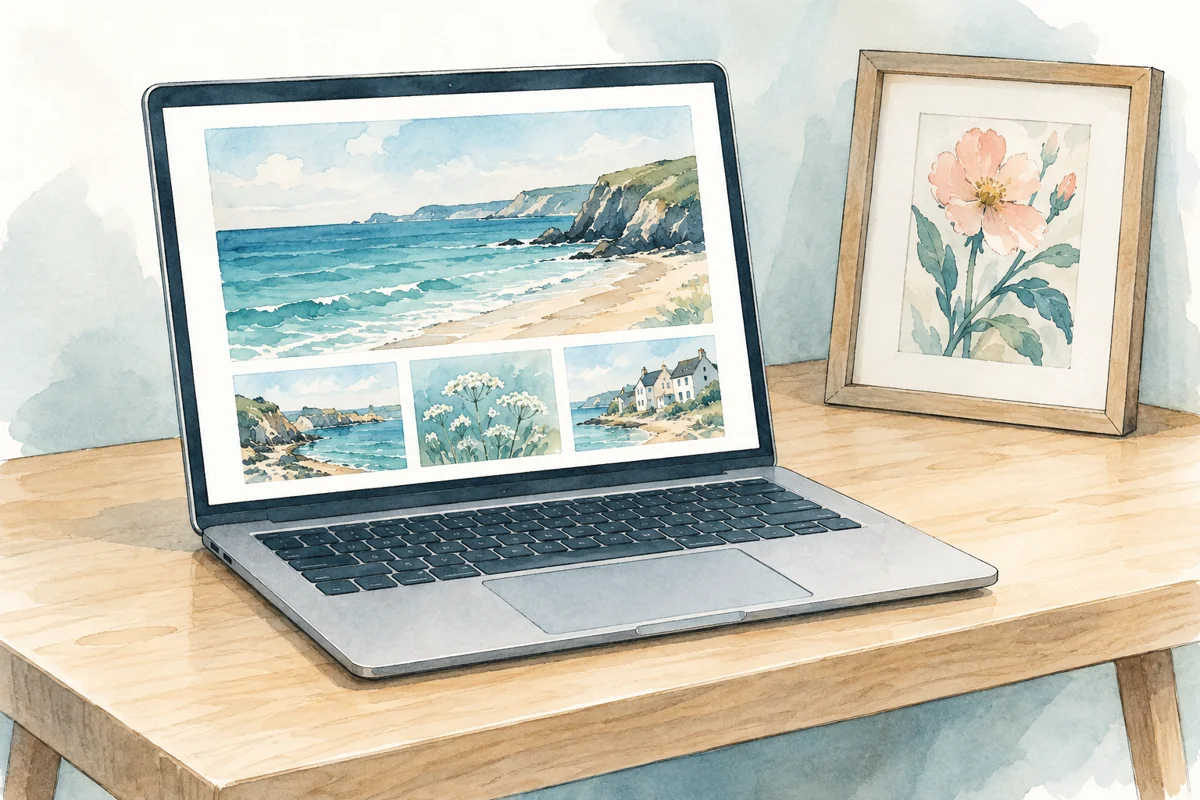
Your own website gives you room to show your paintings and tell the stories behind them. It also takes time to build, maintain and bring visitors to it. I know from building this website how much time and research is needed!
After lots (& lots!) of research, I chose WordPress and Divi. Details such as a magnifying view or numbered hotspots can help visitors explore a painting and its story. You don’t need to build a large online shop just to show a portfolio.
A blog can show more about you as an artist. Matthew Emeny’s blog is an example, with insights into his paintings.
Online galleries, craft marketplaces and stock-image libraries do different jobs. Check whether you are selling an original, a print or permission to reproduce an image; compare the fees and conditions for that particular service.
Teaching & workshops
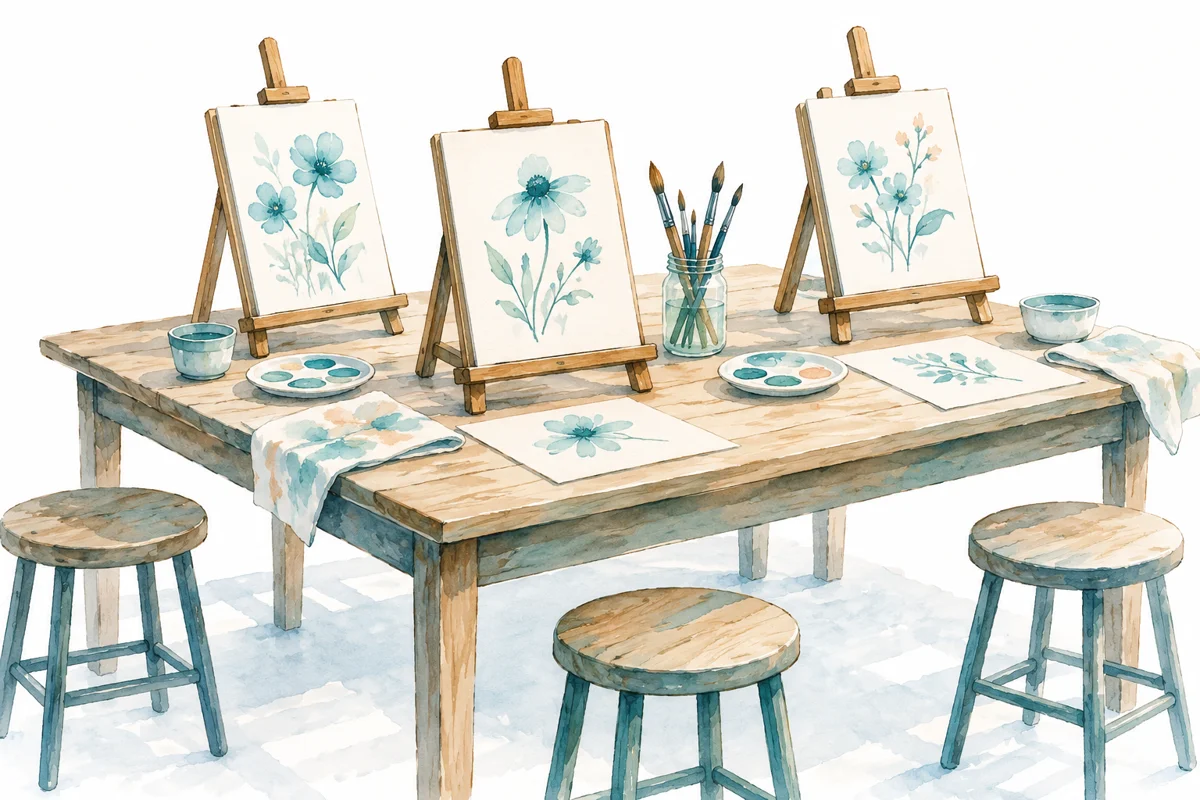
Teaching could mean a local class, a workshop or an online course. Think about what you enjoy teaching and who would benefit from it.
Recorded courses take time to prepare, film and edit. They may also need updates, promotion and help for students, so allow time for that ongoing work.
Could your art become a jigsaw puzzle?
If you’re an artist, I would love to help you too!
Have a look at my free online jigsaw puzzles. Maybe I could even showcase some of your original paintings in your own section of an Artist’s Gallery I may set up in the future?
This website is supported entirely by my kind readers - thank you so much for visiting! There are no adverts, and I don't accept any payment for reviews or sponsorship of any product. Instead, there are some links where, if you buy something, I may earn an affiliate commission. As an Amazon Associate, I earn from qualifying purchases at no cost to you. If you do choose to buy through my links - a genuine big thank you!