The Best Wooden Jigsaw Puzzles for Adults
Wooden puzzles can be so much better than cheaper cardboard puzzles. They can literally last a lifetime and be passed down through generations. The different cutting process allows unique puzzle shapes called whimsies, so a cat puzzle can feature cat-shaped pieces!
I’m Geoff, former Director of Product Development at Gibsons Games, with over 20 years in jigsaw puzzle development. Below is my guide to choosing the best wooden puzzles.
This website is supported entirely by my kind readers - thank you so much for visiting! There are no paid display adverts, and I don't accept any payment for reviews or sponsorship of any product. Links marked * are affiliate links. If you buy something through one of them, I earn an affiliate commission at no extra cost to you. As an Amazon Associate, I earn from qualifying purchases. If you do choose to buy through my links - a genuine big thank you!
Latest Wooden Puzzle Deals
Selected discontinued puzzles are on sale. View sale*
While stocks last. Check current prices and availability; discontinued-item sales are final. Checked on Nautilus’s website on 19 October 2026.
Geoff’s Picks
My personal picks for their unique, amazing designs!
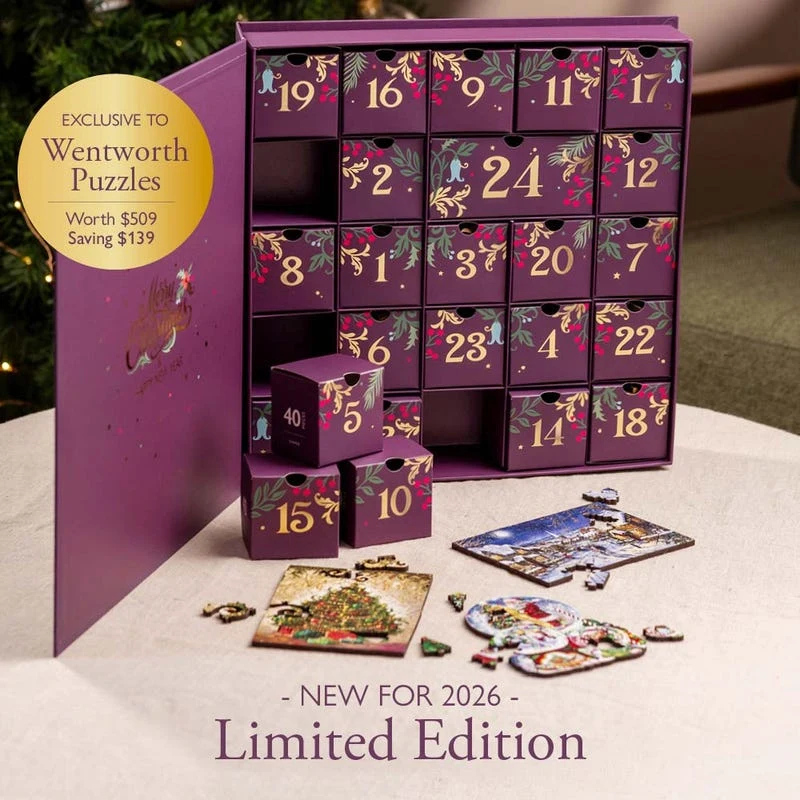
24 Days of Christmas – The Best of Wentworth Puzzles Advent Calendar
24-day Advent calendar
The Ultimate Christmas Puzzle to last generations!
Check prices *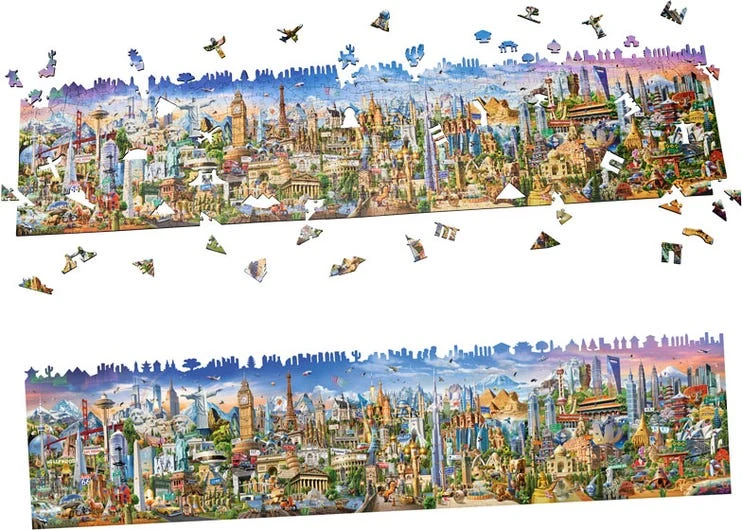
World Landmarks – Longest Puzzle
Adrian Chesterman · over 1 metre wide
I love travelling, so this brings back unique memories in a unique puzzle!
Check prices *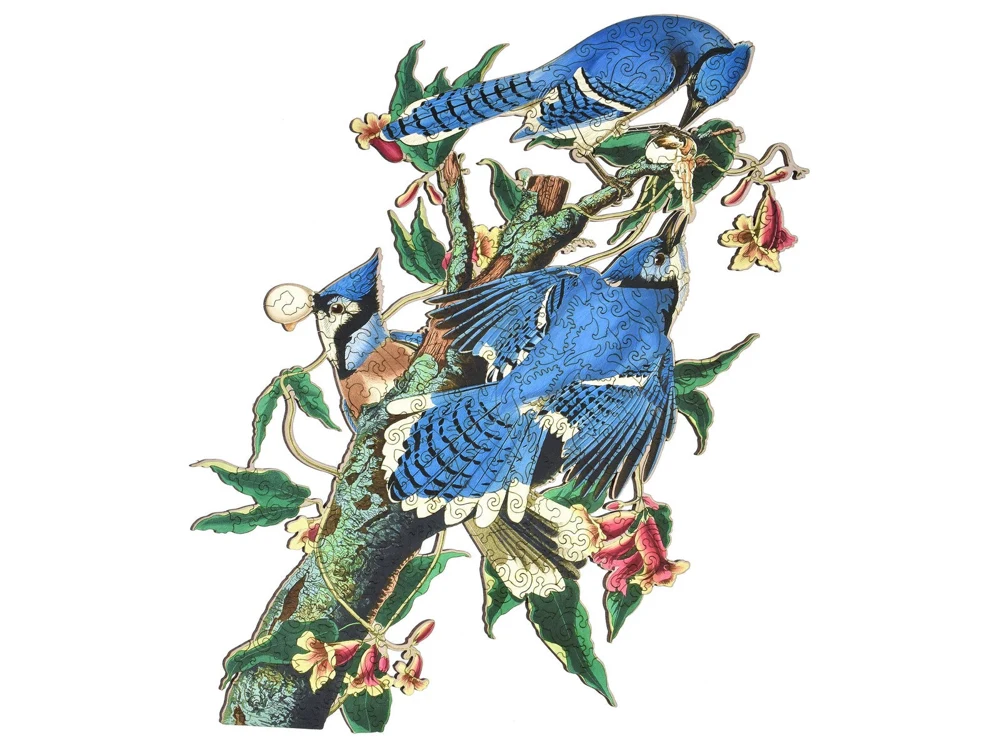
Blue Jay
John James Audubon · 318 pieces · approx. 33.7 × 39.4cm
Just absolutely beautiful. More art than a puzzle.
Check prices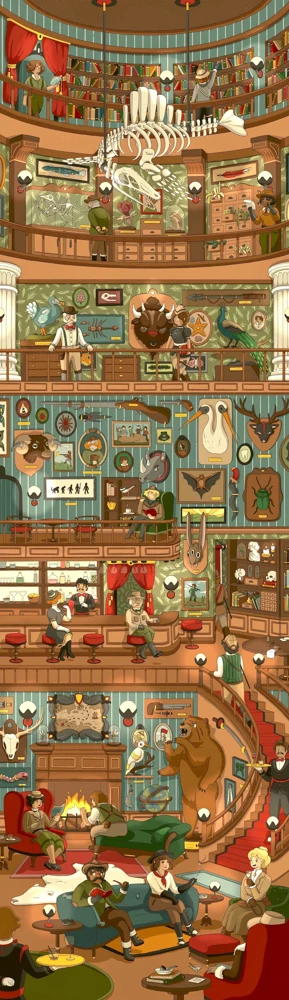
Curiosity Club
Louise Kruse · 508 pieces · approx. 21 × 71.1cm
A real puzzler’s puzzle with something in every piece.
Check prices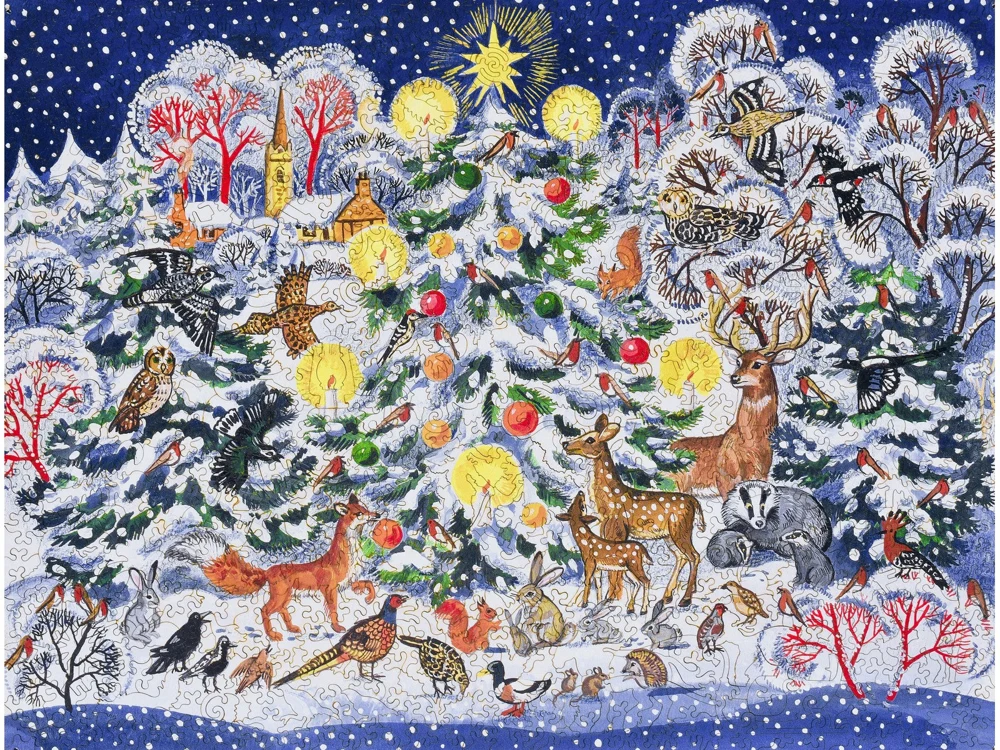
Christmas Tree
Elena Khmeleva · 755 pieces · approx. 40 × 52.7cm
Reminds me of The Lion King with all the animals gathering round.
Check prices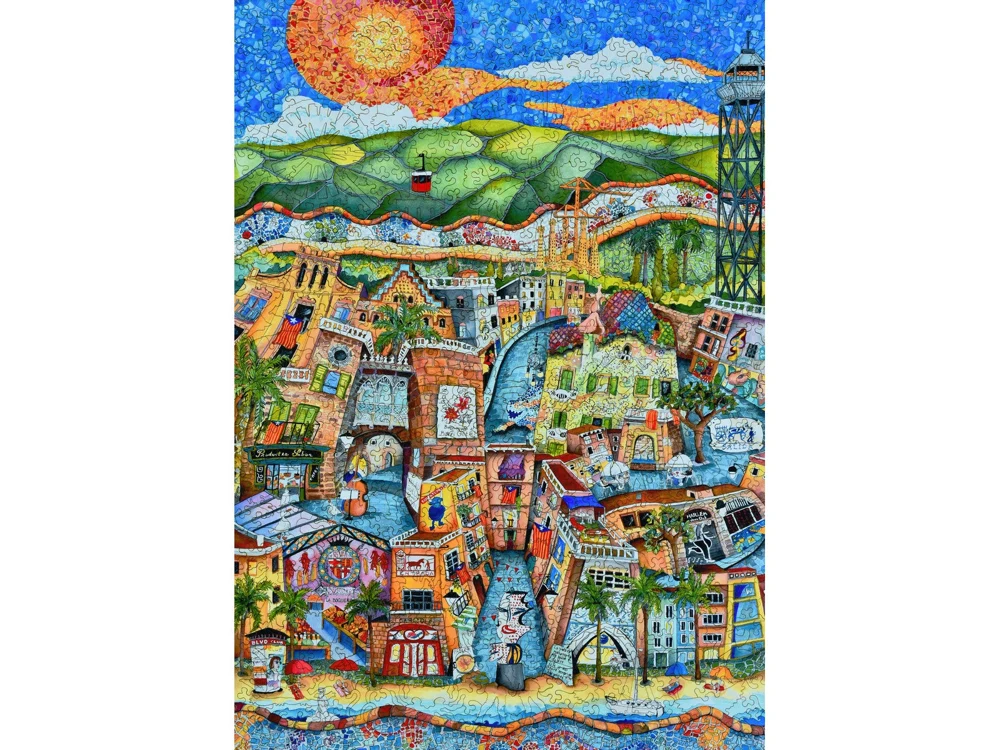
Barcelona
Linnea Pergola · 673 pieces · approx. 37.5 × 52.7cm
Amazing city captured in an amazing puzzle. Love the Gaudí wall at the top.
Check prices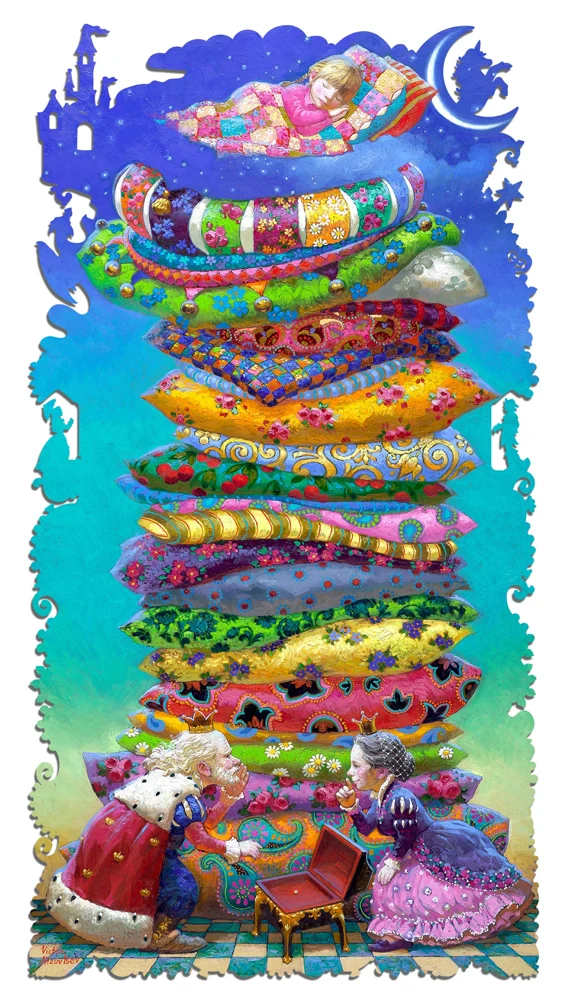
Princess And The Pea
Victor Nizovtsev · 540 pieces · approx. 30.5 × 56.5cm
A magical quilt lover’s puzzle!
Check prices
Sunset Over Steel
Ryan James · 509 pieces · approx. 45.7 × 30.5cm
Probably the most interesting New York artwork I’ve seen in a puzzle!
Check prices *Best Wooden Puzzle For…
Looking for a first wooden puzzle, a Christmas treat or a gift for a cat lover? Start here.
For beginners
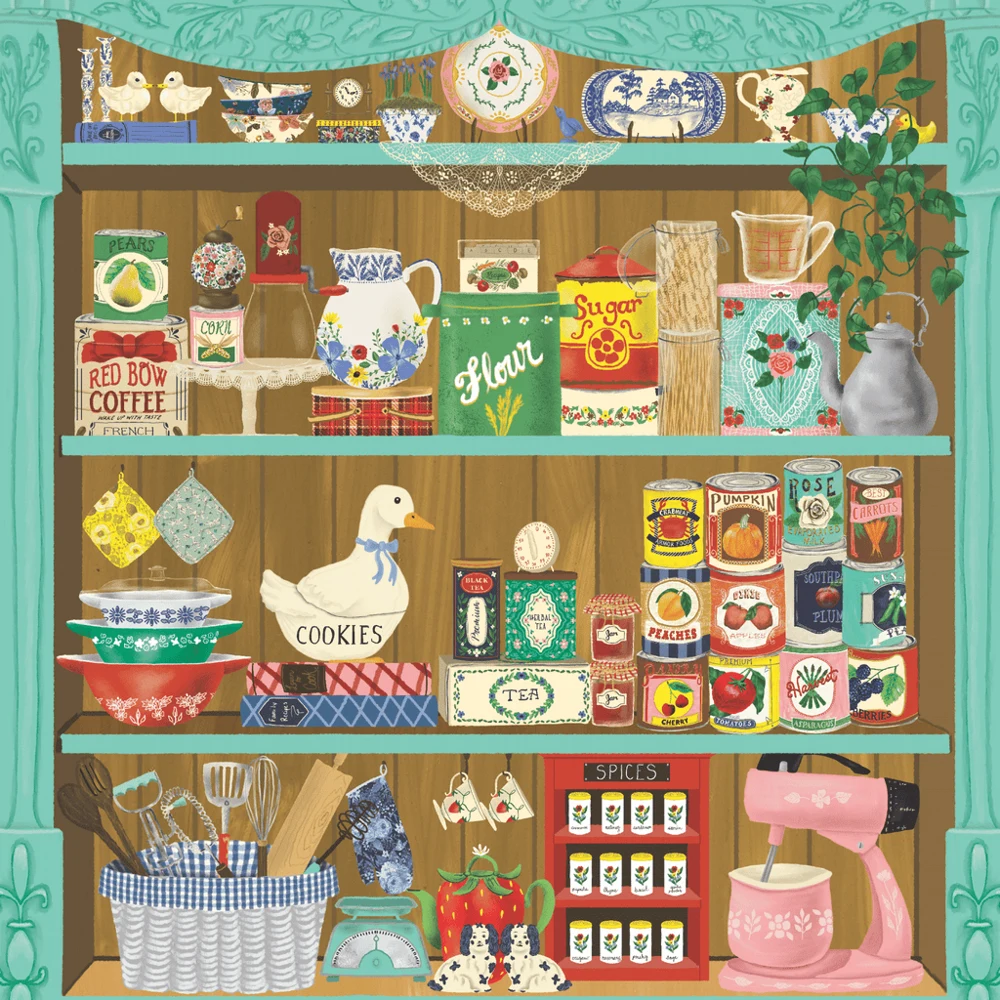
Grandma’s Pantry
Abby Jacobs · 240 pieces · 27.9 × 27.9cm · Modern cut · Level 2 · poster included
So many interesting jars and packets in this one that you will know where every piece fits.
Check prices *Ordering & piece supportFor a challenge
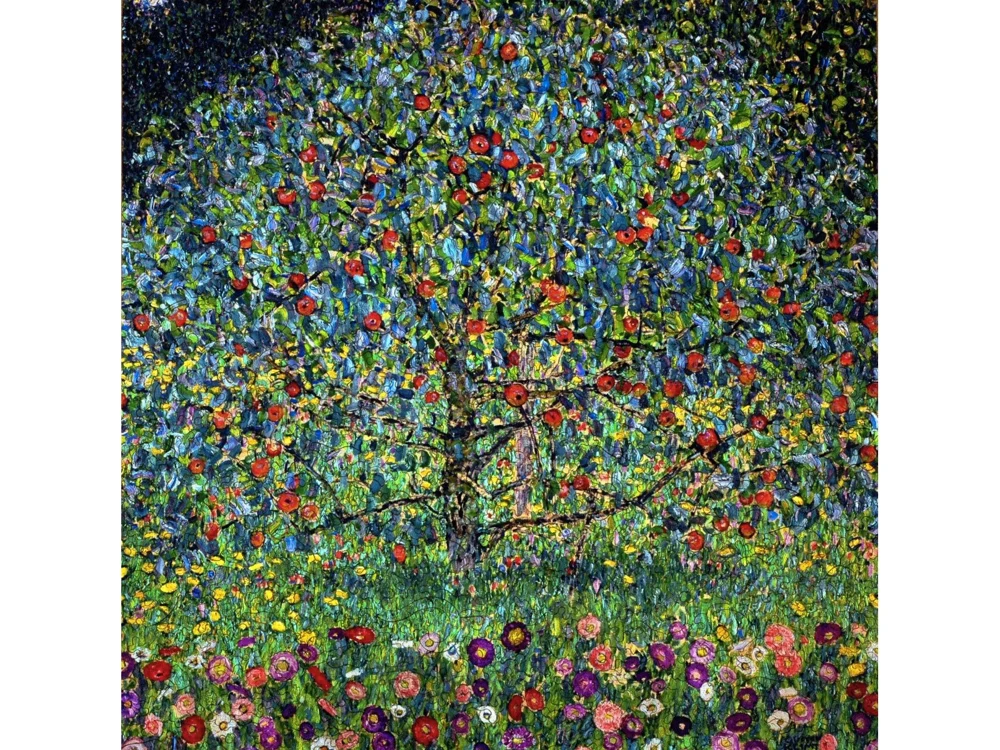
Apple Tree
Gustav Klimt · 463 pieces · approx. 37.5 × 37.5cm
I wouldn’t do it, but you wanted a challenge!
Check pricesOrdering & piece supportFor a gift
Princess And The Pea
540 pieces · Artifact
All those patterned quilts make this a lovely gift for someone who enjoys sewing.
See Geoff’s Pick →For animal lovers
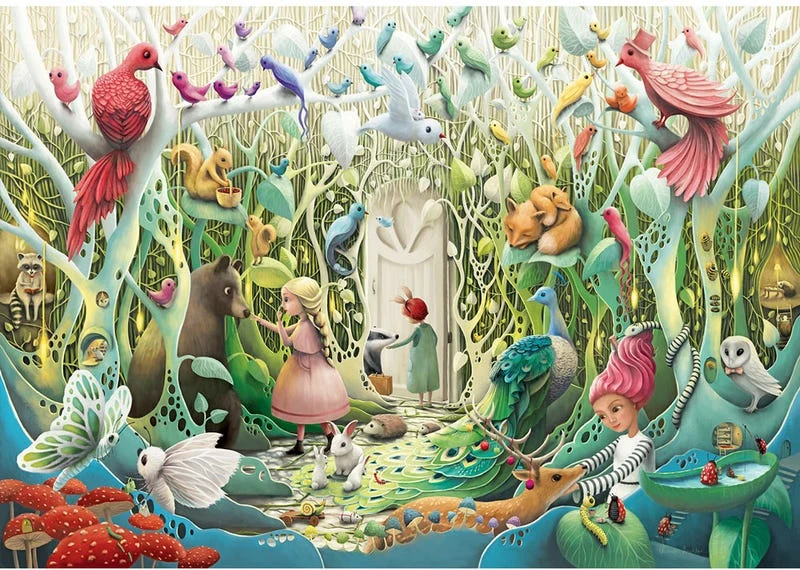
The Not-So-Secret Garden
Demelsa Haughton · standard 250-piece edition · 36 × 25cm
A fantasy garden full of strange creatures and tiny details, with whimsies to match.
Check prices *Ordering & piece supportFor art lovers
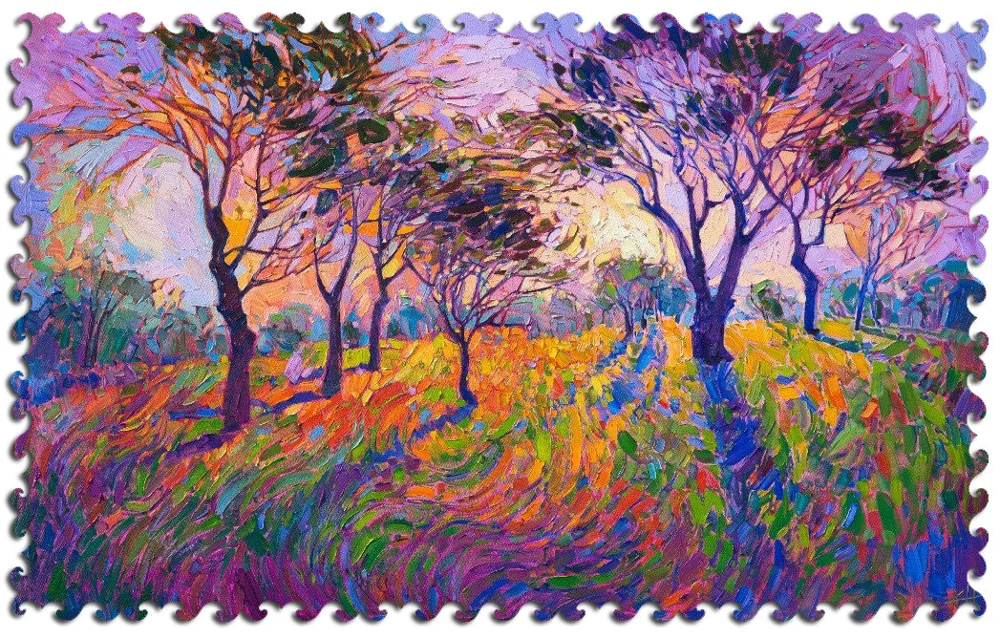
Crystal Grove
Erin Hanson · 357 pieces · 25.4 × 40.6cm · among Artifact’s most difficult puzzles
Erin Hanson’s colourful grove, with an irregular edge around the trees.
Check pricesOrdering & piece supportFor unusual shapes
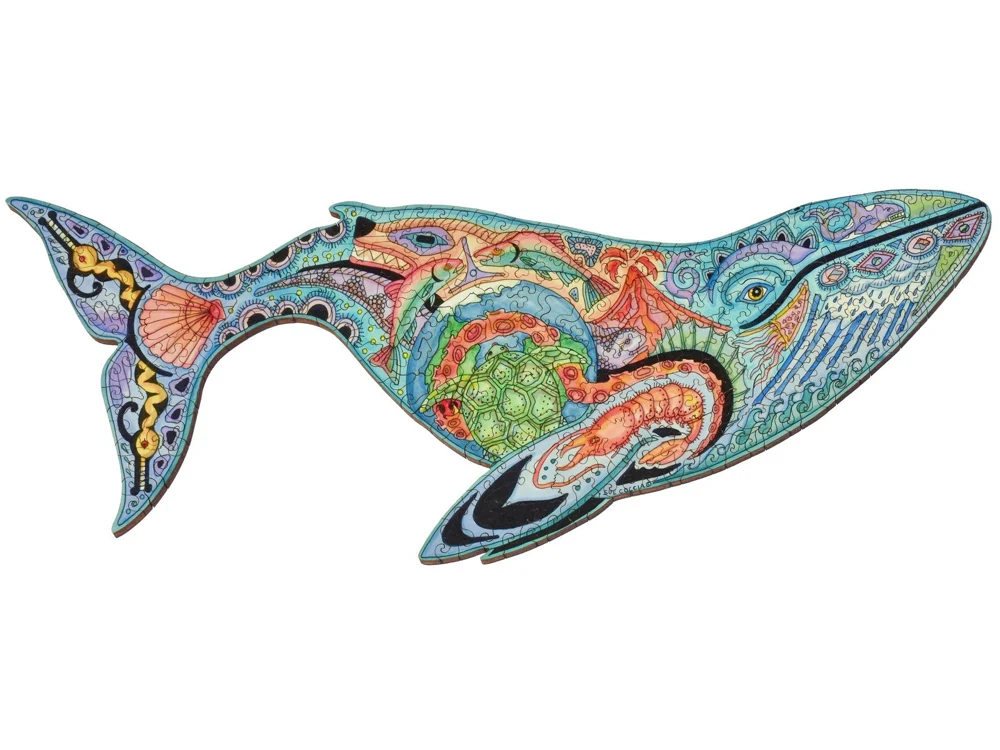
Blue Whale
Sue Coccia · 211 pieces · 21 × 54.6cm
The whole puzzle is shaped like a whale, with a ship and anchor hidden among the pieces. Allow plenty of width on your table.
Check pricesOrdering & piece supportFor Christmas
24 Days of Christmas – The Best of Wentworth Puzzles Advent Calendar
24-day Advent calendar · Wentworth
Open a new puzzle each day in the run-up to Christmas.
See Geoff’s Pick →For cat lovers
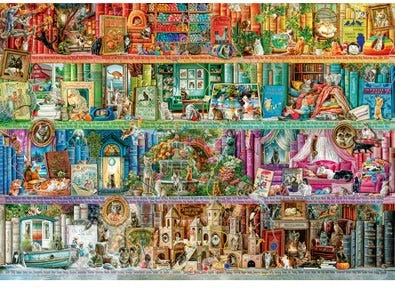
Library of Cats
Aimee Stewart · choose your edition
Books and cats everywhere! There are lots of little details to discover. Check the piece-count option and finished size.
Check prices *Ordering & piece supportFor golf lovers
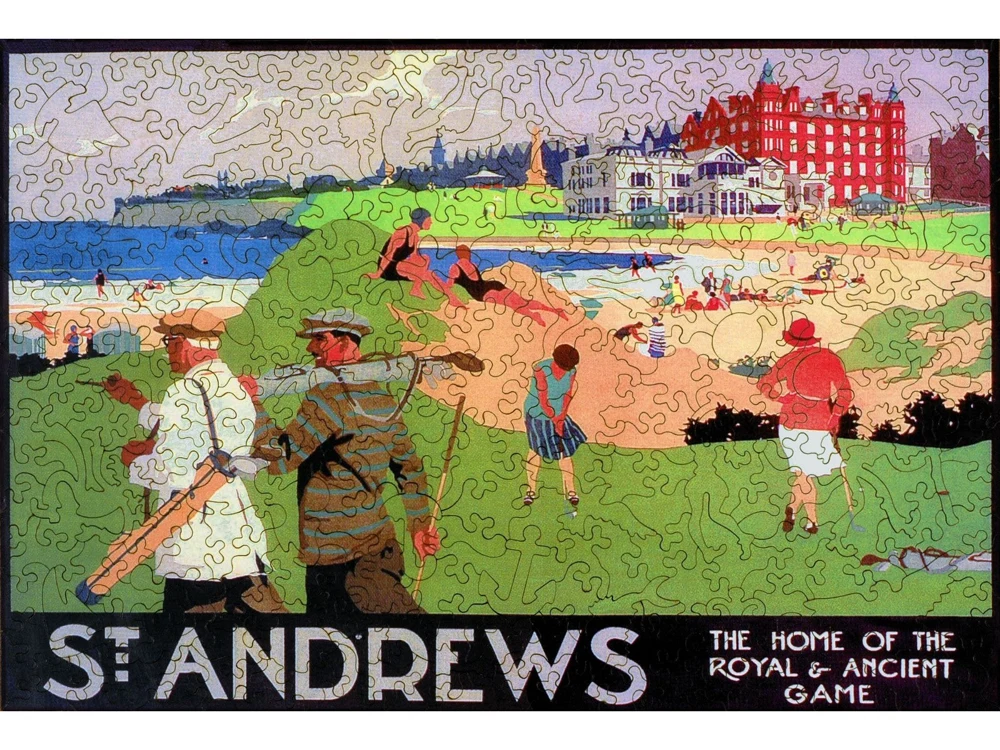
St. Andrews
258 pieces · 21.6 × 32.4cm
A colourful scene of golfers and holidaymakers at St. Andrews.
Check pricesOrdering & piece supportCompare Wooden Puzzle Manufacturers
How do wooden puzzle companies vary in the type of wood, puzzle thickness and how their pieces are cut?
Wentworth Wooden Puzzles
- Wiltshire, UK · since 1991
- 4mm wooden composite
- Laser-cut · themed whimsies
Read more about Wentworth Wooden Puzzles
15–1,500 pieces across the range
Range & construction
Standard puzzles use sustainably sourced 4mm wooden composite. The range includes different piece counts and large-piece formats; select the edition before comparing its size.
Cuts
Classic cuts include themed whimsies, dissected corners and irregular pieces. Shaped borders, stand-up figures and Extra Difficult cuts serve different needs; some repetitive Extra Difficult designs omit whimsies.
Ordering & shipping
Use Wentworth’s US shop. Puzzles ship from the UK by tracked FedEx; the selected edition shows its despatch time. PO boxes are excluded. Check the current delivery terms and any sales tax before paying.
Returns & pieces
The published satisfaction policy allows unused puzzles in original packaging to be returned within 14 days, with prior contact; non-faulty return postage is yours. Faulty items have separate terms. Ask about a missing piece: the cited policy does not promise individual replacements.
Background
Wentworth has made wooden puzzles in Wiltshire since 1991.
Sources: Materials & cut · Guarantee · US delivery · Returns · Ordering & shipping
Browse Wentworth Wooden Puzzles ↗Liberty Puzzles
- Boulder, USA · since 2005
- ¼-inch wood (about 6.35mm)
- Laser-cut · multipart figures
Read more about Liberty Puzzles
Maker reports 1,000+ designs
Range & construction
Quarter-inch wood (about 6.35mm), laser-cut in Boulder. The maker’s 1,000-plus design figure describes its range, not a live stock count; smaller and custom formats also exist.
Cuts
Large figurative pieces, shaped outlines and figures assembled from several pieces are distinctive. Liberty generally does not assign difficulty ratings. Custom photo puzzles and removable frames extend the range.
Ordering & shipping
Order direct from Boulder. Liberty uses UPS for physical addresses in the continental US, and USPS for PO boxes, Alaska, Hawaii and US territories. Check the product’s lead time: faster shipping does not shorten production. International orders use FedEx, with duties and taxes paid at checkout.
Returns & pieces
Stock puzzles must remain in original packaging for the published 180-day returns policy; custom puzzles and frames are excluded, and customers pay return postage. Replacement pieces are free: Liberty pays shipping for its errors and asks you to pay it for your own losses. More than five missing pieces are assessed individually.
Background
Jeff Eldridge and Chris Wirth founded Liberty in 2005, drawing partly on the Wirth family’s Chagrin Falls puzzle collection. It still designs and makes puzzles in Boulder.
Sources: History & range · Support & delivery · Ordering & shipping
Browse Liberty Puzzles ↗Artifact / Ecru Puzzles
- Port Townsend, USA · since 2009
- Maple plywood · about 5.56mm
- Laser-cut · picture-specific shapes
Read more about Artifact / Ecru Puzzles
Ecru: matt images, closer cut
Range & construction
Maple plywood, nominally ¼ inch but closer to 7/32 inch (about 5.56mm). Ecru is a line within Artifact; the featured examples have 135 and 286 pieces.
Cuts & finish
Artwork-specific connectors and inventive borders vary by puzzle. Ecru images are matte with less glare, and its pieces closer-cut; standard Artifact images are brighter and glossier.
Ordering & shipping
Order direct from Artifact. US orders normally travel by USPS or UPS, with standard and priority options at checkout. The address must accept USPS delivery. Delivery estimates vary by region; priority shipping is not a guaranteed arrival date.
Returns & pieces
Unopened returns are accepted; opened returns are assessed individually without a full-refund promise. A first-assembly missing piece is normally replaced free. Later losses cost US$15 including remaking and US shipping. The replacement service specifies a US delivery address.
Background
Artifact began in 2009 as a small-scale manufacturing experiment. It now works in Port Townsend, after earlier production in Seattle and California.
Sources: Company background · Materials & support · Ordering & shipping
Browse Artifact / Ecru Puzzles ↗Nautilus Puzzles
- Central California, USA · since 2018
- 4mm birch/basswood plywood
- Laser-cut · Modern & Victorian
Read more about Nautilus Puzzles
Maker-rated difficulty levels
Range & construction
Laser-cut 4mm birch/basswood plywood, made in central California. Product pages identify piece count, cut style and the maker’s difficulty level.
Cuts
Doors to the World is a 557-piece Modern cut, Level 3; Klimt’s Farm Garden is a 324-piece Victorian cut, Level 2. These levels compare Nautilus designs, not every brand. The featured Grandma’s Pantry includes a reference poster.
Ordering & shipping
Order direct from California. Nautilus uses USPS or UPS for US deliveries. Its free-shipping offer is limited to qualifying orders within the contiguous US, with some products excluded. Choose a paid service if USPS cannot deliver to your address. International shipping and import charges have separate terms.
Returns & pieces
Published terms differ: the FAQ says 60 days for unopened returns, while product pages say 30. Confirm the applicable window before ordering; return-label costs are deducted.
First replacement pieces are free while a design is in production, with shipping charged outside the US; repeated replacements may cost extra. Used puzzles are excluded, and retired designs may not be replaceable.
Background
The maker dates the business to 2018.
Sources: Materials & returns · Replacement terms · Product-page terms · Ordering & shipping
Browse Nautilus Puzzles ↗Stave Puzzles
- Vermont, USA · since 1974
- ¼-inch, five-layer cherry-backed board
- Hand-cut · sanded and finished
Read more about Stave Puzzles
Traditional, Trick & Teaser puzzles
Range & construction
Artisans guide fine saw blades through five-layer, cherry-backed quarter-inch board (about 6.35mm), then sand and finish the back by hand.
Cuts
Traditional puzzles include figure pieces and deceptive cuts. Trick and Teaser formats add different challenges; use Stave’s own ratings and the named genre when choosing. Personalisation is also available.
Ordering & shipping
Order direct from Vermont. Many puzzles are made to order, so allow for crafting time as well as delivery. Prices are in US dollars; applicable taxes and shipping are added at checkout. Worldwide delivery is also offered.
Returns & pieces
“Piece of Mind” offers a replacement product, exchange or refund subject to return review. Contact Stave first; shipping may be non-refundable except for company errors. Custom work may cease to be refundable once production starts. Lost or damaged pieces can be remade for a fee; the original puzzle may need to be returned.
Background
Stave has made puzzles in Vermont since 1974.
Sources: Cuts & construction · Guarantee & ordering · Ordering & shipping
Browse Stave Puzzles ↗Victory Wooden Puzzles
- British brand · origins in 1922
- The Flapper: 5mm linden plywood
- Modern laser-cut · multipart figures
Read more about Victory Wooden Puzzles
Brand re-established in 2022
Range & construction
The modern Flapper edition specifies 250 pieces and 5mm linden plywood. Other editions have their own counts and materials; do not transfer these specifications to a vintage Victory puzzle.
Cuts
The current company uses laser cutting, including recognisable figures and shapes assembled from several pieces. Vintage Victory puzzles were hand-cut.
Ordering & shipping
Victory lists US delivery from its Midwest warehouse by tracked ground service. Check the chosen product’s stock, despatch estimate and delivery terms. The business also distributes from premises near the original Bournemouth factory; this does not establish where every manufacturing stage happens.
Returns & pieces
Check the selected product’s current returns information and ask about a missing or damaged piece before ordering; a universal individual-piece replacement guarantee is not established by the cited sources.
Background
The original brand grew from Gerald Hayter’s puzzle business. Its Boscombe factory closed in 1988; the current owners describe re-establishing the brand in 2022.
Sources: Brand history · Current product specification · Ordering & shipping
Browse Victory Wooden Puzzles ↗StumpCraft
- Calgary, Canada
- Art printed directly on 6mm wood
- Laser-cut around the artwork
Read more about StumpCraft
Canadian artists · five-level scale
Range & construction
Designed and made in Calgary, Alberta, with Canadian artists, estates and galleries. The maker describes printing directly onto 6mm wood. Its catalogue groups mini puzzles and larger piece-count bands.
Cuts
The cut follows the artwork. A five-level system compares designs within StumpCraft’s range; Birds & Bees has 284 pieces, four small images and a 3/5 rating.
Ordering & shipping
StumpCraft ships from Canada to the US, US territories and APO/FPO/DPO addresses. Shipping is calculated at checkout; delivery estimates start when the carrier receives the parcel. Orders outside Canada may incur customs duties or other import charges, payable by the customer.
Returns & pieces
A dedicated broken/missing-piece request form is available. Use that support route and check the current returns terms for your order; the cited sources do not establish a universal free-replacement guarantee.
Background
Canadian art collaborations and local landscapes are central to the Calgary workshop’s range.
Sources: Workshop & artists · Piece support · Ordering & shipping
Browse StumpCraft ↗Unidragon
- Shaped animals & mandalas
- Laser-cut wooden puzzles
- Tree of Life: 200 / 350 / 700 pieces
Read more about Unidragon
Size editions: M, KS & RS
Range & construction
Tree of Life has 200 pieces at 25cm square, 350 at 33cm and 700 at 45cm. Named M, KS and RS editions have different footprints.
Cuts & finish
A jagged round border surrounds a tree that assembles separately, with stars, planets, birds and flowers among the shapes. The product describes lacquered details; that specification applies to Tree of Life.
Ordering & shipping
Use the official US store at unidragon.us. It states that orders ship from a US warehouse. Check the current shipping terms for your address and edition before ordering.
Returns & pieces
The US store says to contact support for missing or damaged pieces and accepts unused puzzles in original packaging within 30 days of delivery. The brand also advertises refund or replacement help for faults, transit damage or dissatisfaction; check the applicable policy for your order.
Range focus
Shaped animals and mandalas are the focus of the examples here; compare the named product and edition.
Sources: Tree of Life editions · Ordering & shipping
Browse Unidragon ↗Manufacturer information checked 14 October 2026. Published range figures are attributed, not live stock counts. Returns and replacement policies have conditions; follow the linked terms for your order.
Wood, Materials and Thickness
What wood do makers use?
Plywood has bonded layers; a hardwood veneer gives it a face or backing without making it solid hardwood. Fibreboard and other wood composites have a different construction. Check the named product’s specification: makers use different boards across their ranges.
Does thicker wood mean better quality?
Thickness adds weight and affects storage and framing. It does not tell you how interesting the cut will be. Even a thick piece can have a delicate projection, so handle fine shapes gently whatever the board’s thickness.
Hand-cut puzzles
A cutter guides the board around a fine saw blade, choosing where lines, connectors and figures meet. Stave also sands and finishes the back by hand. This individual work helps explain the price and made-to-order times.
Laser-cut puzzles
A laser follows a designed path, allowing intricate connectors and repeatable cuts. Liberty explains that this can leave a burnt-wood smell. Unusual connectors and misleading edges can change the challenge more than the piece count suggests.
Do the pieces stay together?
Support assembled sections on a board or tray: some cuts interlock; others meet edge to edge. Loose joins differ from false fits, where wrong pieces appear to join. Neither alone proves damage, and connected pieces may still need support.
Matt or glossy?
Artifact describes its standard images as brighter and glossier; Ecru’s matt images reduce glare. Fall is an Ecru example. Think about reflections from your lamp as well as the colours you enjoy. Neither finish suits every reader.
Whimsies and Unusual Pieces
Whimsies are recognisable shaped pieces that make wooden puzzles unique. Their shapes can be designed around the artwork, so a cat puzzle can feature cat-shaped pieces.

Wentworth Wooden Puzzles
These Wentworth penguins stand up! Other cuts use flat themed figures, dissected corners or deliberately repetitive pieces.
Explore the cut ↗
Liberty Puzzles
Liberty cuts animals and other recognisable shapes. Some figures use several pieces — look closely at Mabula Elephant!
Explore the cut ↗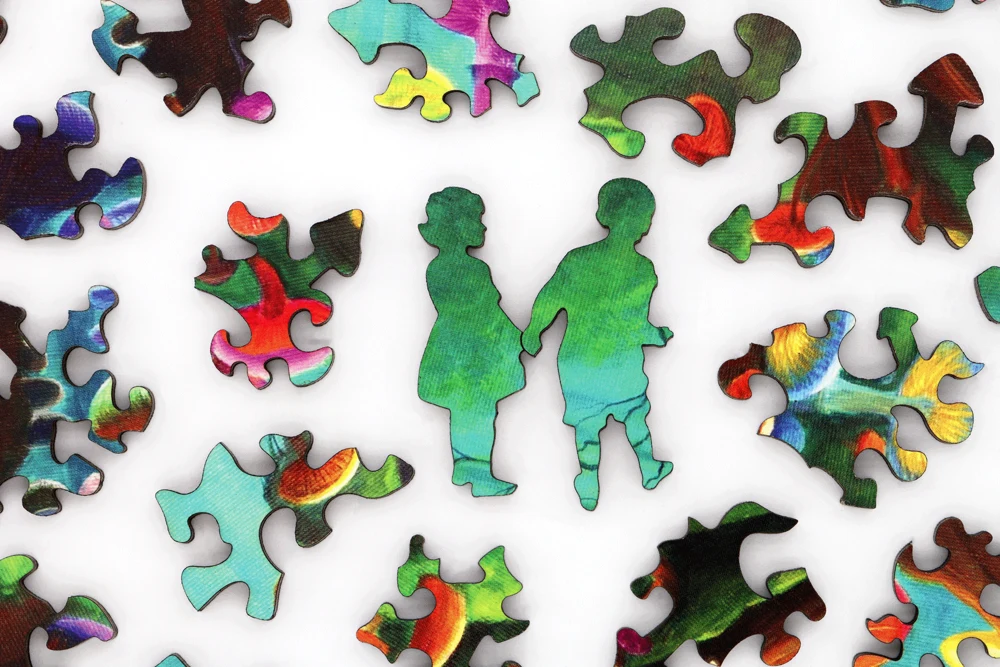
Artifact Puzzles
Mushroom Glow · 286 pieces. Look for mushrooms in the uneven edge and connectors, with storybook and forest figures among the pieces.
Explore the cut ↗Mushroom Glow pieces · Artifact. Manufacturer photograph.
Nautilus Puzzles
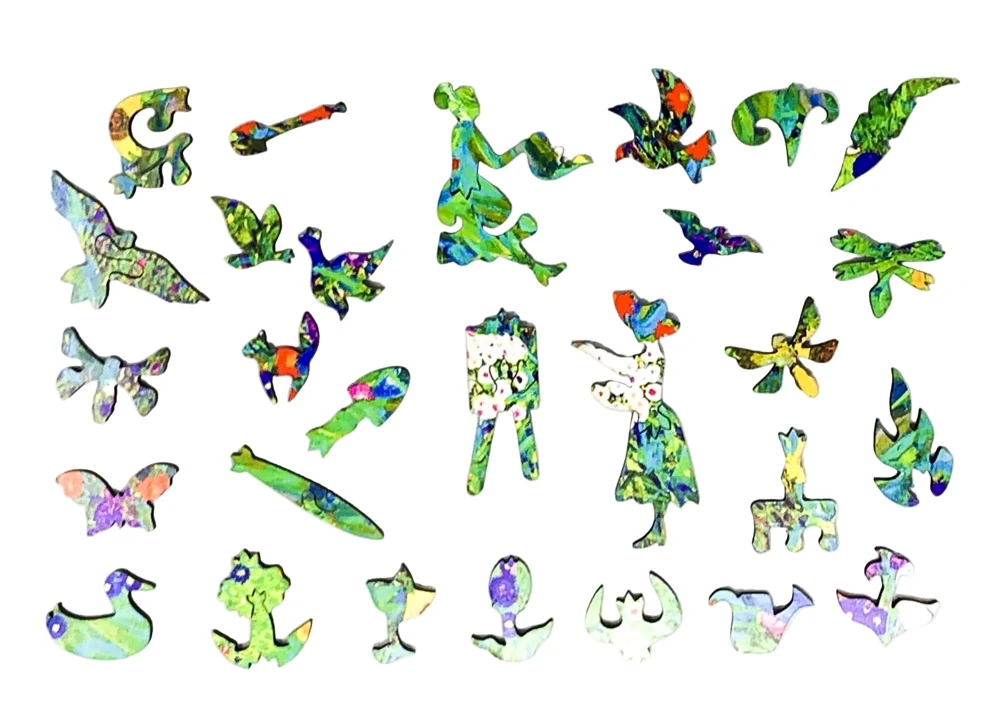
Klimt’s Farm Garden · 324 pieces, Victorian cut. Nautilus has hidden flower-shaped pieces to match all those flowers in the painting.
Explore the cut ↗Klimt’s Farm Garden figure pieces · Nautilus. Manufacturer photograph.
Stave Puzzles
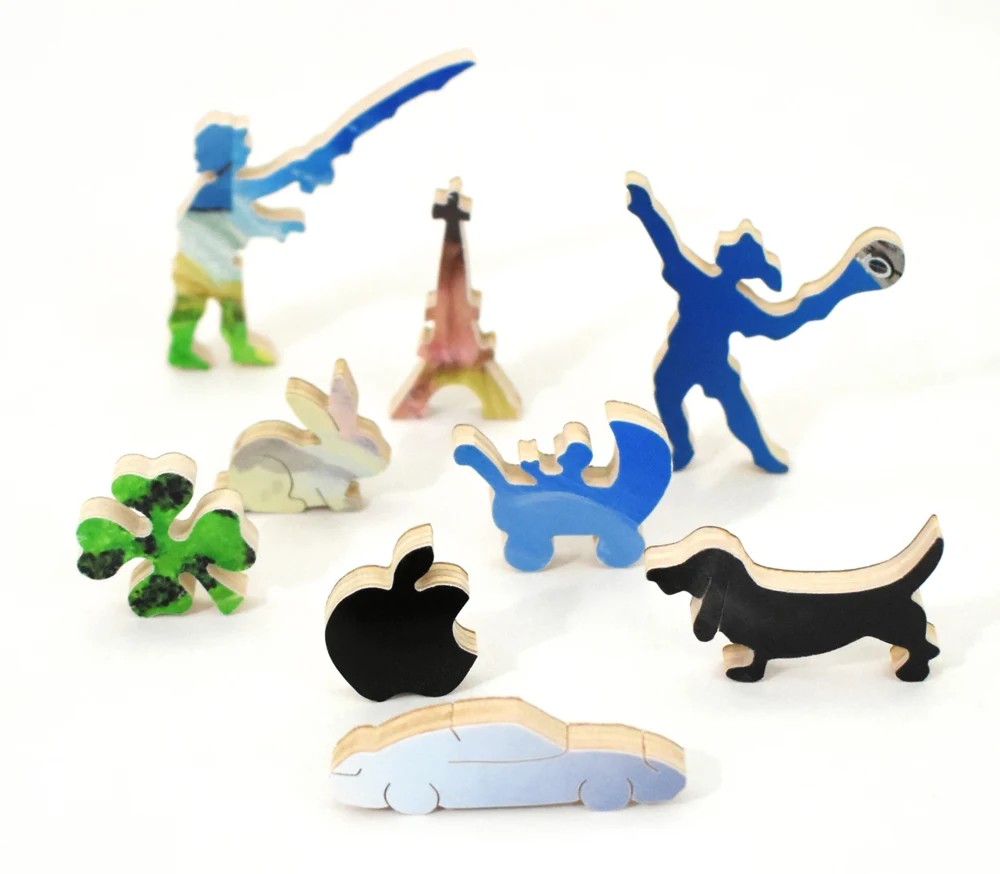
Stave still cuts its Traditional puzzles by hand with a fine saw. Look out for figure pieces and shapes designed to mislead you!
Explore the cut ↗Representative silhouette pieces · Stave. Manufacturer photograph.
Unidragon
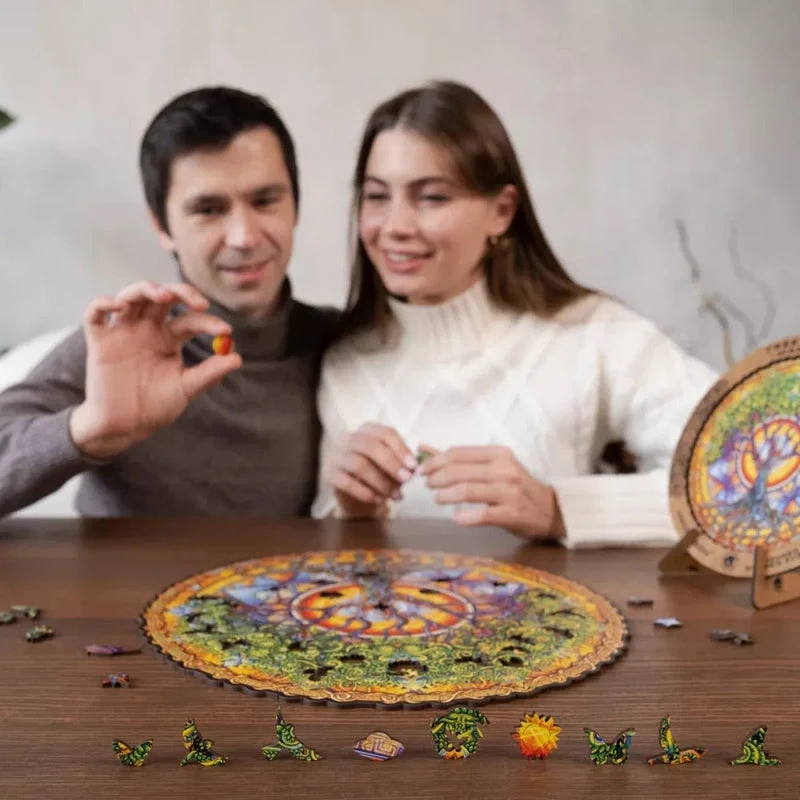
Tree of Life · M 200, KS 350 or RS 700 pieces. The central tree assembles separately, with stars, planets, birds and flowers around it.
Explore the cut ↗Tree of Life with separate shaped pieces · Unidragon. Manufacturer photograph.
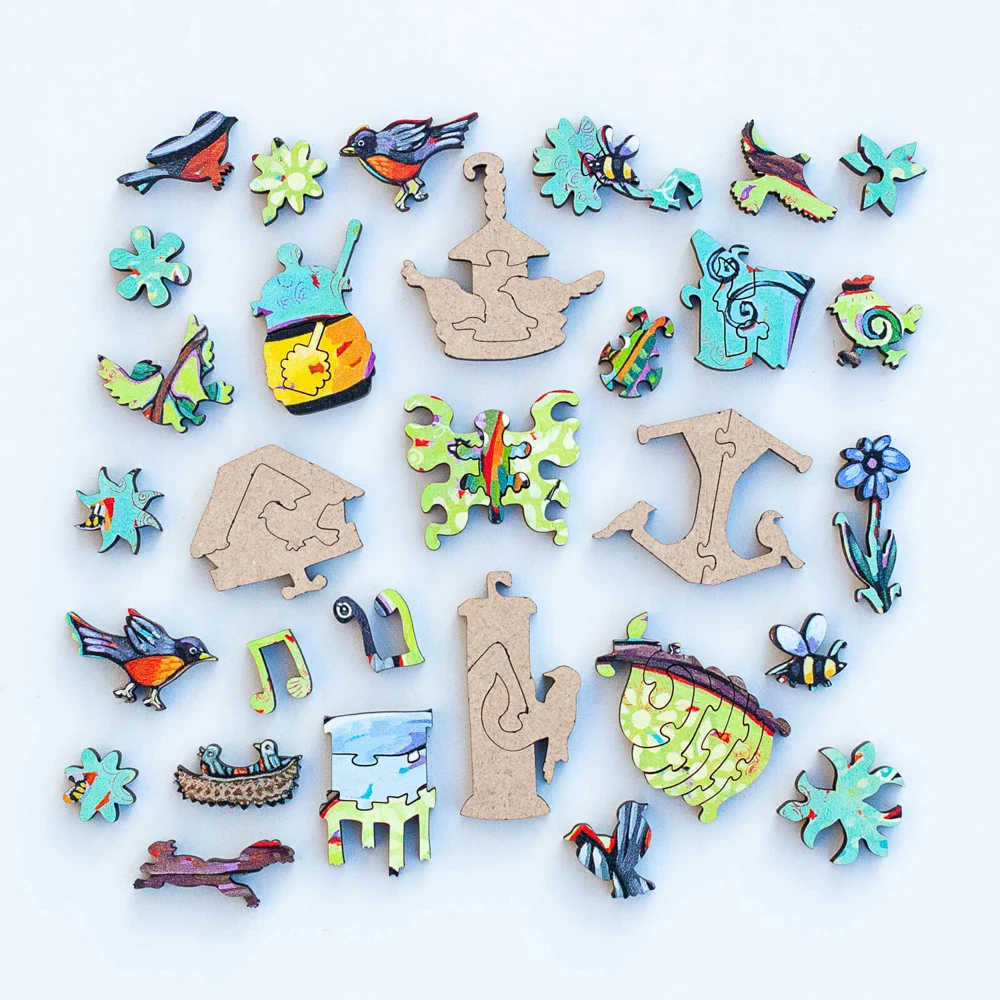
StumpCraft
Birds & Bees · 284 pieces. Four small pictures mean extra straight edges! Look for honeycomb, hives, birdhouses and feeders among the pieces.
Explore the cut ↗Birds & Bees whimsy pieces · StumpCraft. Manufacturer photograph.
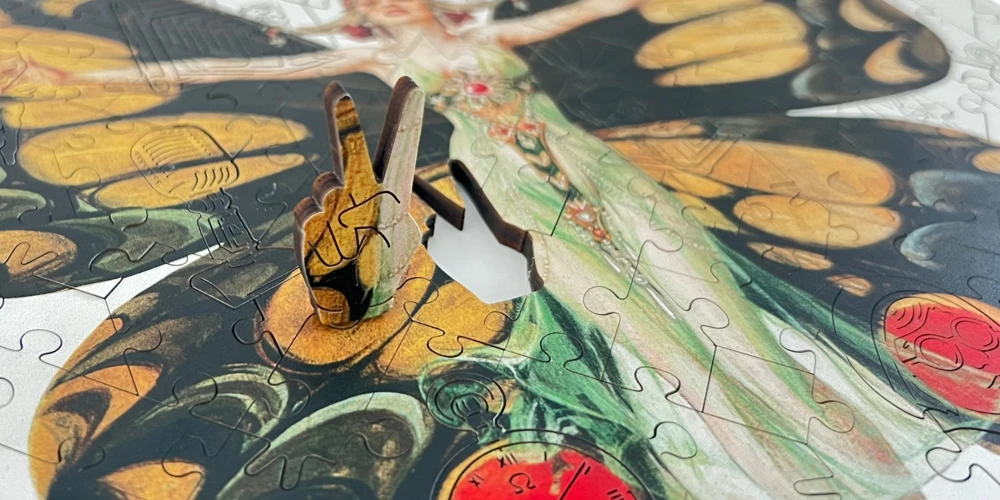
Victory Wooden Puzzles
The signature V-shaped hand is a recognisable finishing piece. Victory also uses themed silhouettes, including figures made from more than one piece.
Explore the cut ↗Representative Victory whimsy. Manufacturer photograph.
Artwork and Artists
Eight artists to look out for.
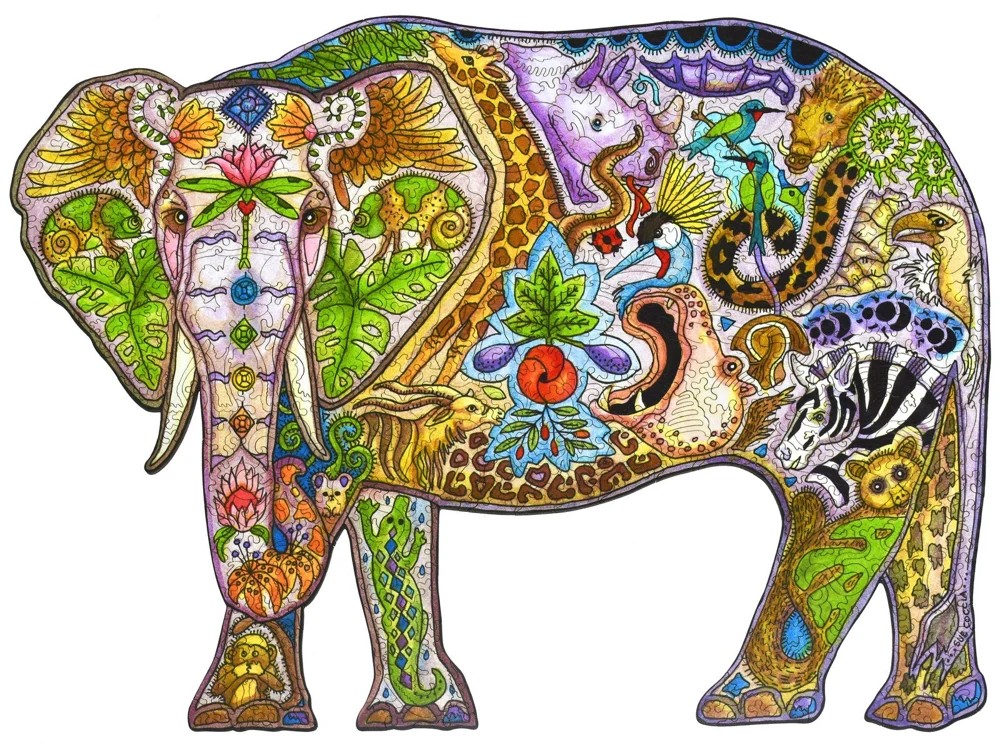
Sue Coccia
Mabula Elephant · Liberty
Look closely at the elephant and you’ll discover all sorts of smaller creatures hidden inside!
Explore this design →Demelsa Haughton
The Not-So-Secret Garden · Wentworth
There’s so much going on in this fantasy garden! Strange creatures, tiny details and whimsies to match.
Explore this design →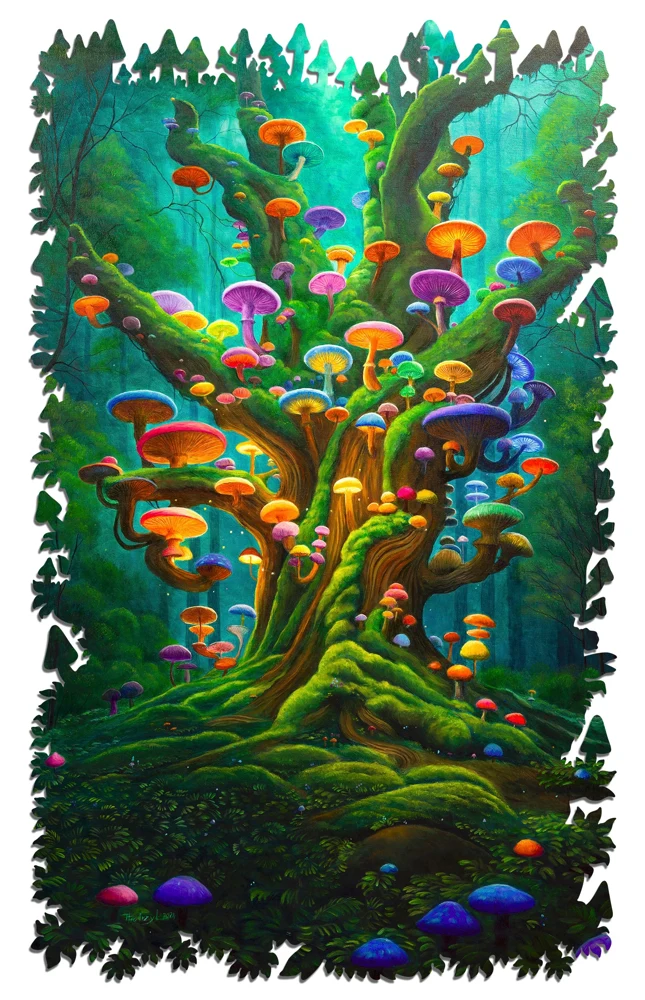
Tomasz Pietrzyk
Mushroom Glow · Artifact
Even the puzzle pieces are shaped to match the mushrooms in this magical forest.
Explore this design →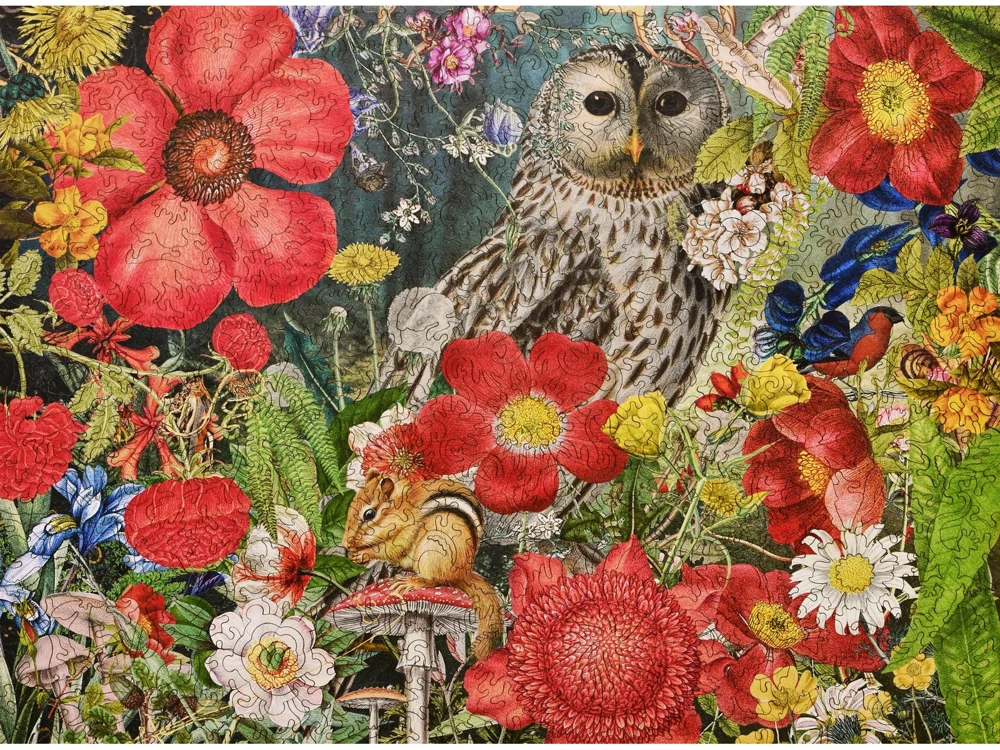
Jena DellaGrottaglia
Owl – Woodland Flower · Liberty
An owl, fairies, mushrooms and flowers — plenty to spot in this woodland scene.
Explore this design →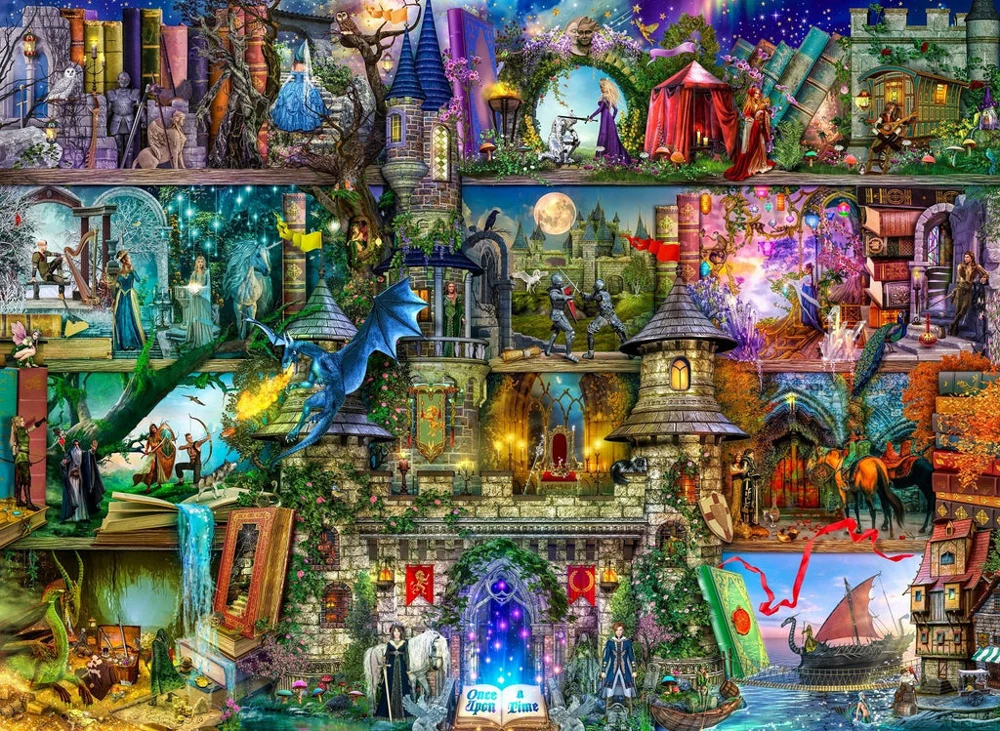
Aimee Stewart
Once Upon a Fairytale · Nautilus · 428 pieces
Once Upon a Fairytale is packed with little details. You could spend ages just looking at the artwork!
Explore this design →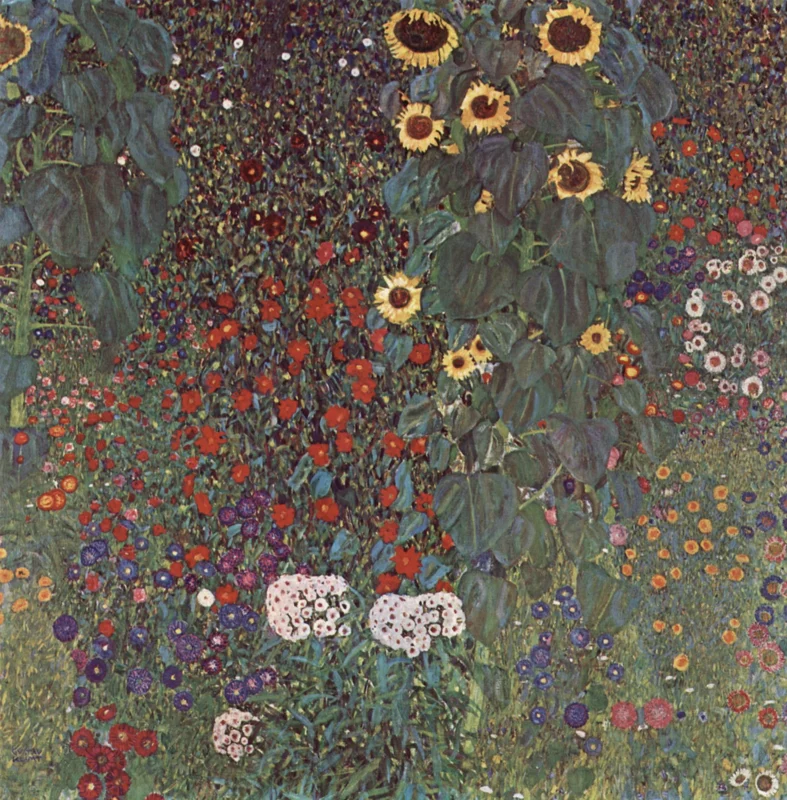
Gustav Klimt
Farm Garden · Nautilus
Flowers everywhere, with flower-shaped whimsies to match the painting.
Explore this design →Original painting shown.
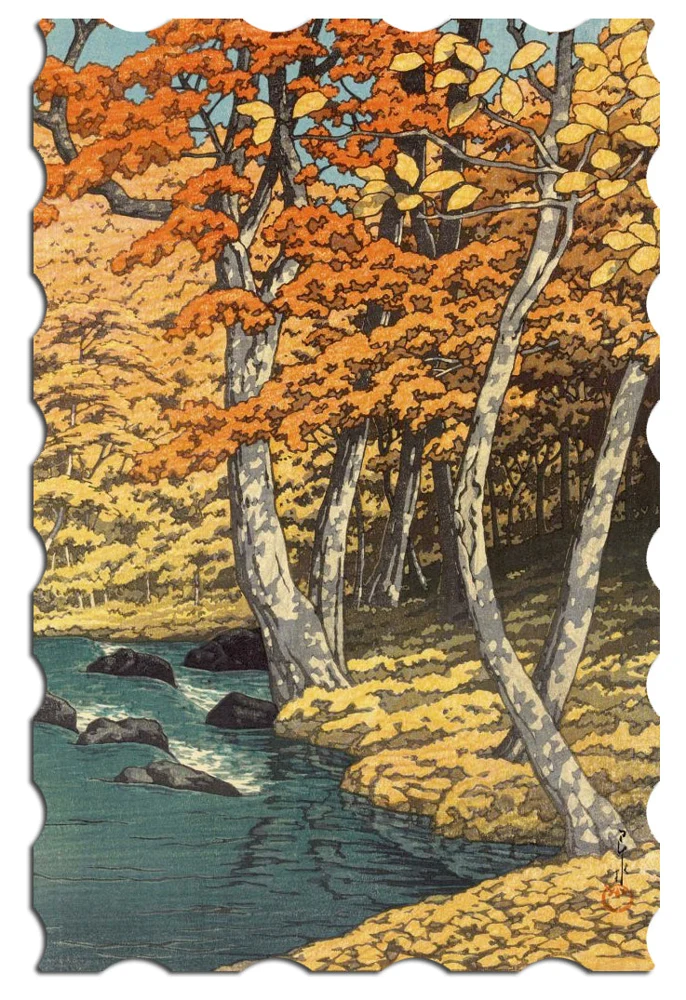
Kawase Hasui
Fall · Ecru
A stream runs through the autumn leaves. Even the connectors are leaf-shaped!
Explore this design →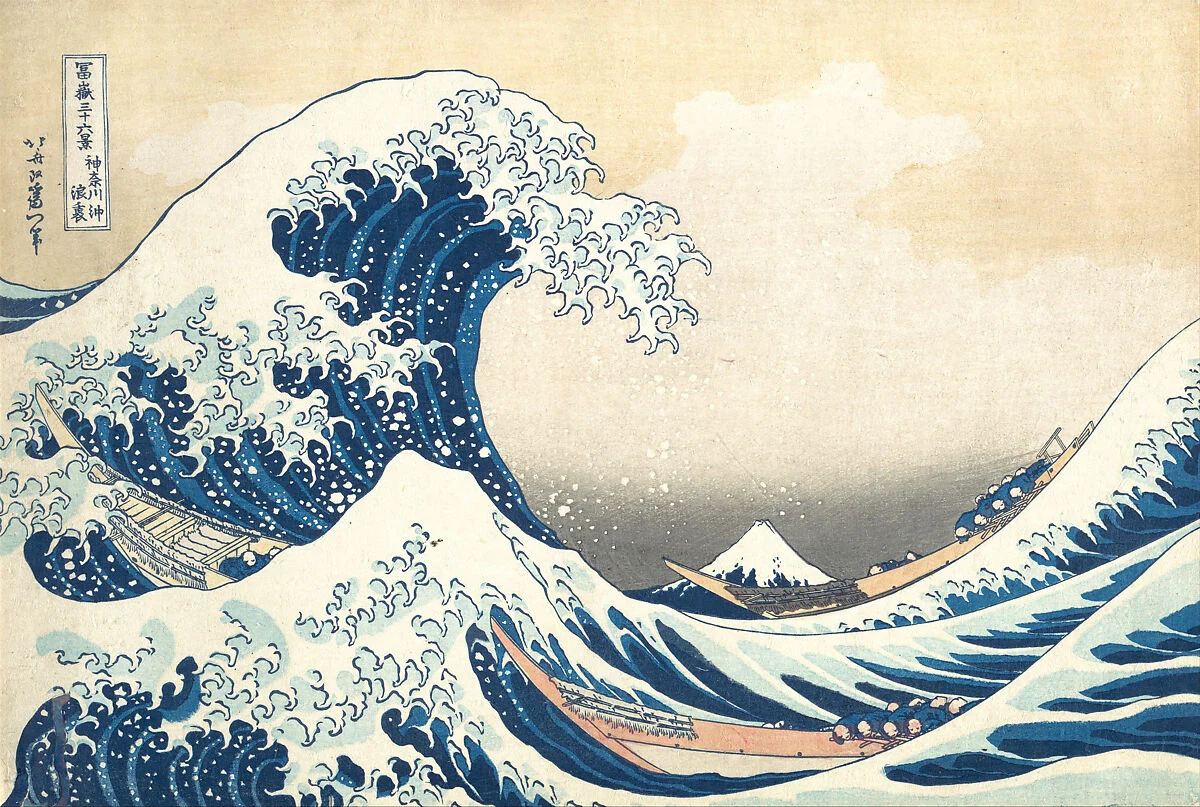
Katsushika Hokusai
The Great Wave off Kanagawa · Nautilus · 400 pieces
The famous Great Wave, tiny boats and Mount Fuji in the background. The image here is the original print, rather than a photograph of the puzzle.
Explore this design →Caring for Wooden Puzzles

Storing your wooden puzzles
Keep all the pieces in their original box or bag, with the label and picture. Store somewhere dry, away from damp and sudden changes in conditions. A tray helps keep small whimsies together while you work.

Be careful with delicate pieces
Fine sections can break, so don’t force pieces apart. Use a board or tray when moving completed sections, and separate multipart figures before packing away. Keep the pieces away from pets too!

Displaying your finished puzzle
Some wooden puzzles are almost works of art! Liberty recommends removable frames instead of glue, so you can do the puzzle again. For other makes, check the board and finish advice before gluing or mounting. Keep displayed artwork out of strong direct sunlight.
History of Wooden Jigsaw Puzzles
From the dissected maps of the 1760s to hand-cut tricks and modern lasers.
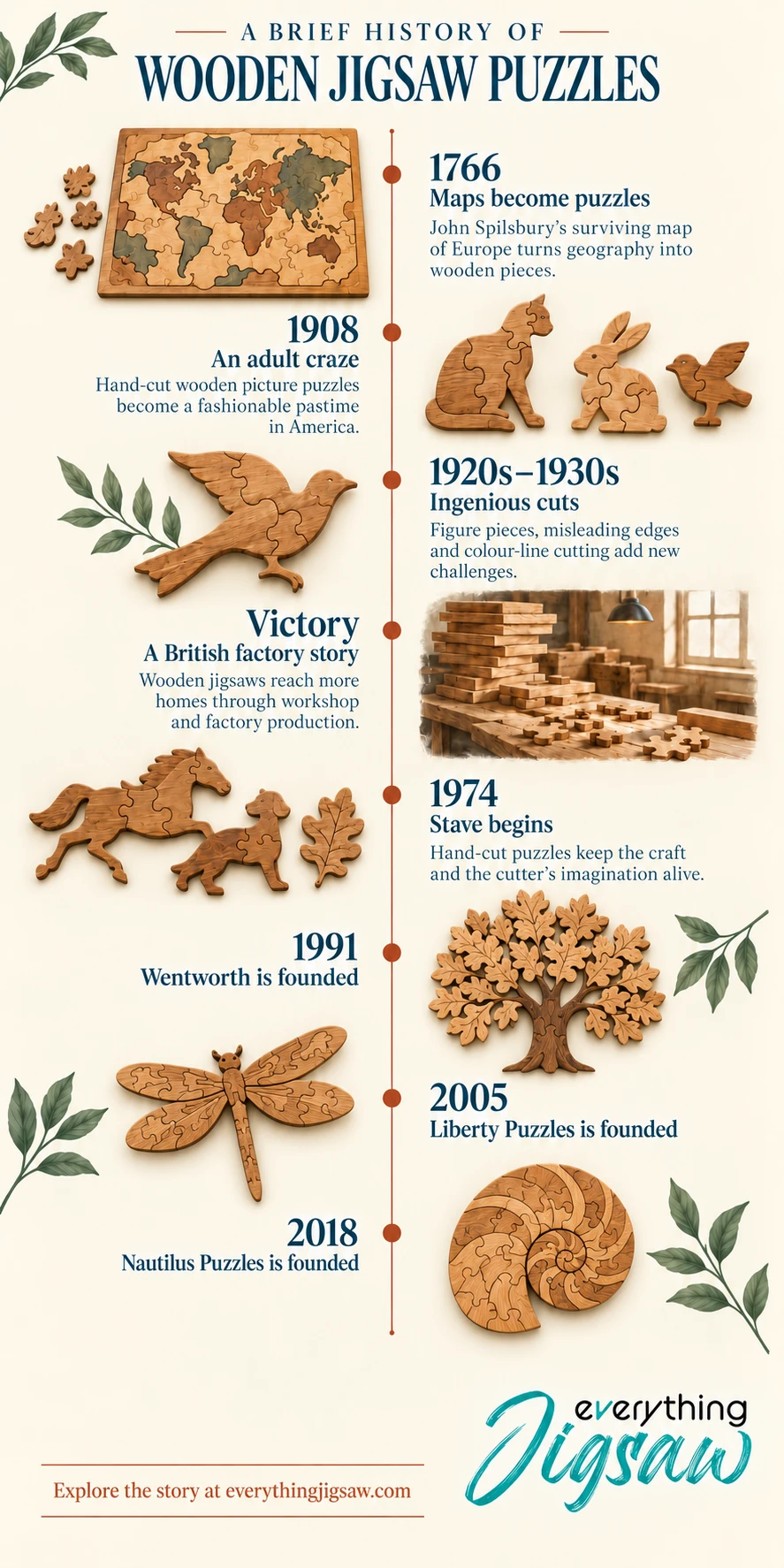
The timeline ends with the founding of Wentworth in 1991, Liberty Puzzles in 2005 and Nautilus Puzzles in 2018.
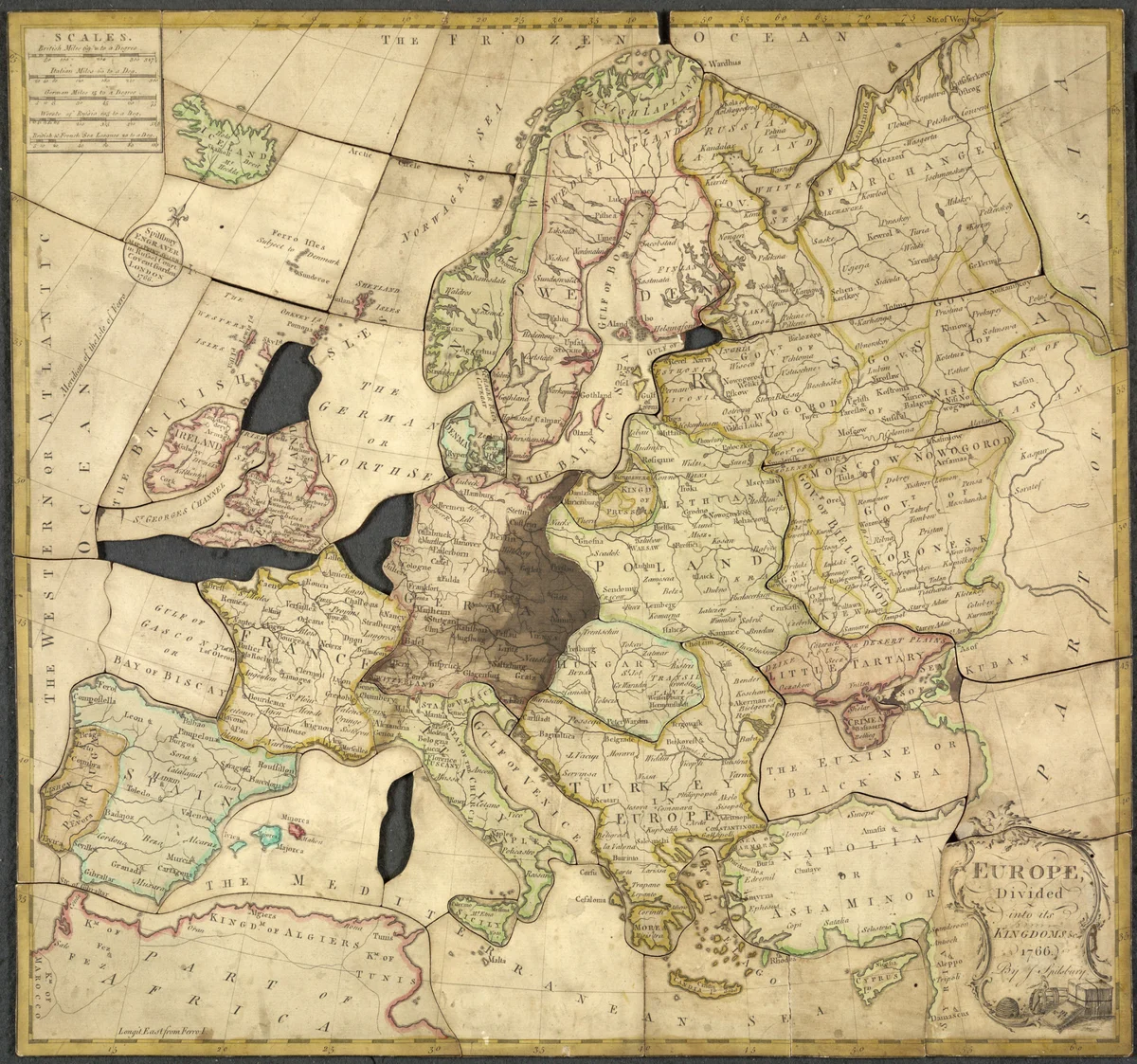
1760s · Learning the world in pieces
Wooden puzzles were geography lessons in the 1760s. Maps were mounted on wood and cut along the country borders. John Spilsbury, a London mapmaker and engraver, is closely associated with these early puzzles; the British Library example shown here dates from 1766.
Look at those cuts! They follow the country borders, without the familiar knobs and sockets. The map is both the picture and the lesson. It’s an early surviving example, rather than proof that nobody made a puzzle before Spilsbury.
1900s · A pastime for adults
By the early twentieth century, wooden puzzles had become entertainment for adults. Puzzle historian Anne D. Williams describes America’s craze of 1908, when handmade puzzles were expensive enough to be fashionable among wealthy households.
Some cutters followed the boundaries of colours, making it harder to see how neighbouring areas joined. Many pieces didn’t interlock, and the box might have no guide picture. Parker Brothers’ Pastime puzzles helped popularise figure pieces and interlocking cuts. A little dog or bird could be a surprise and a useful clue!
1920s and 1930s · More than a picture
During the Great Depression, you could rent puzzles from shops and libraries! Skilled workers made wooden puzzles in small workshops. Williams dates the boom’s peak to 1933, when cheap cardboard puzzles, weekly releases and promotional giveaways were also part of the craze.
Wooden cutters had their own tricks: cutting along colour boundaries, misleading edges and personal figure pieces. A recognisable shape might help you — or lead you completely astray.
Victory · A British factory story
Gerald Hayter began making puzzles while working as a bank clerk. Victory grew from small beginnings into a familiar British brand, with a factory in Boscombe and a much larger workforce. Its hand-cut plywood pictures included maps, landmarks, ships, trains and paintings.
Hampshire Cultural Trust records up to 120 Victory workers in the 1950s. They could cut as many as eight puzzles at once by fastening them in a stack and sawing through the lot! Even at factory scale, someone still had to guide the saw.
Cheaper punched-card puzzles changed the business. Spears took over in 1970, and the Boscombe factory closed in 1988. Today’s revived Victory brand uses lasers; those vintage sets were cut by hand.
1974 onwards · Craft survives, lasers arrive
Stave began in Vermont in 1974 and still cuts its puzzles by hand, using fine blades and a cherry-backed board. Its Traditional, Trick and Teaser puzzles show just how many ways a cutter can keep you guessing.
Lasers made it possible to repeat intricate cuts, with tiny figures, complex connectors and borders shaped around the artwork. Wentworth, Liberty, Artifact and Nautilus all use lasers, but their cuts can look very different.
The picture is only part of the puzzle. Look at the shaped edges, the pieces and even the gaps!

