How to Choose the Best Jigsaw Puzzle? My Unique Insider’s Guide
I will never forget this advice from my previous boss and
I’m Geoff, former Director of Product Development at Gibsons Games with over 20 years in jigsaw puzzle development.
Welcome to my personal ‘insider’s’ guide on what is the best jigsaw
This website is supported entirely by my kind readers – thank you so much for visiting! There are no paid display adverts, and I don’t accept any payment for reviews or sponsorship of any product. Instead, there are some links where, if you buy something, I may earn an affiliate commission. As an Amazon Associate, I earn from qualifying purchases at no cost to you. If you do choose to buy through my links – a genuine big thank you!
What is the best jigsaw puzzle for you?
There is no such thing as the best jigsaw
There is only the best jigsaw
What are you looking for in a jigsaw puzzle?
Some are practical, such as the space you have; others are a matter of taste.
If a jigsaw
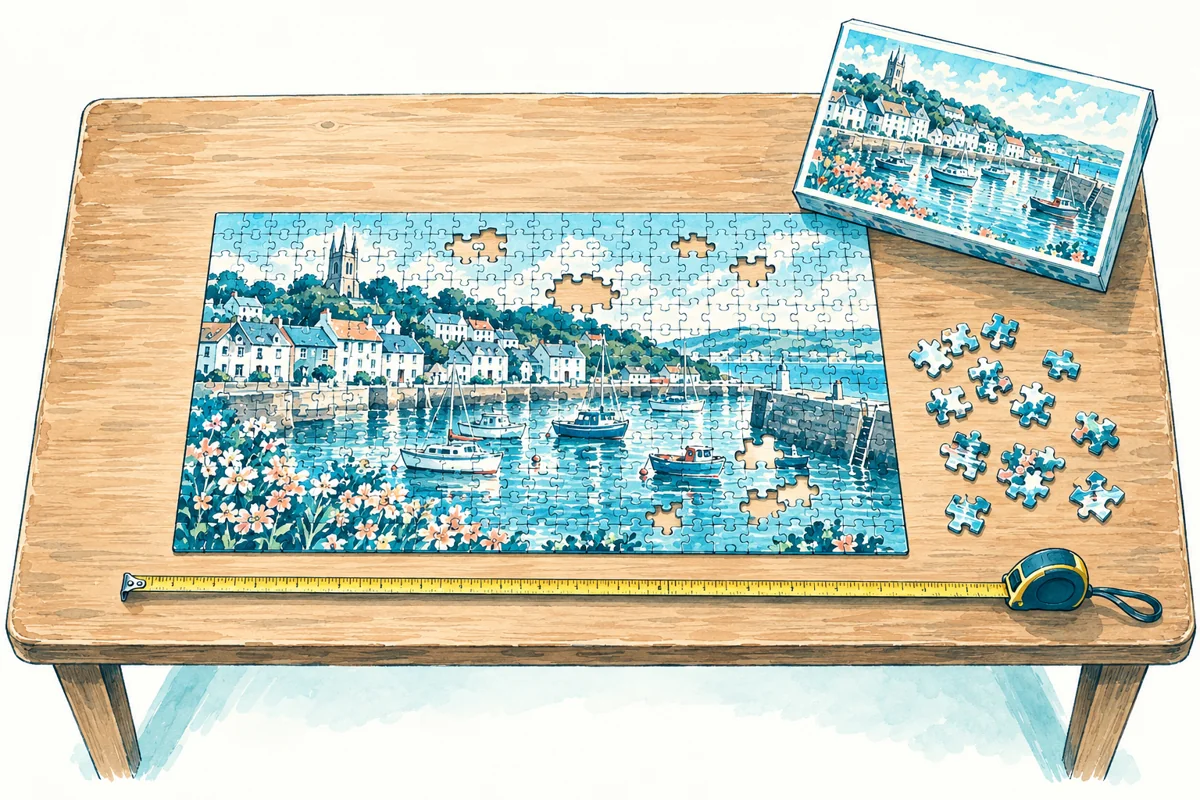
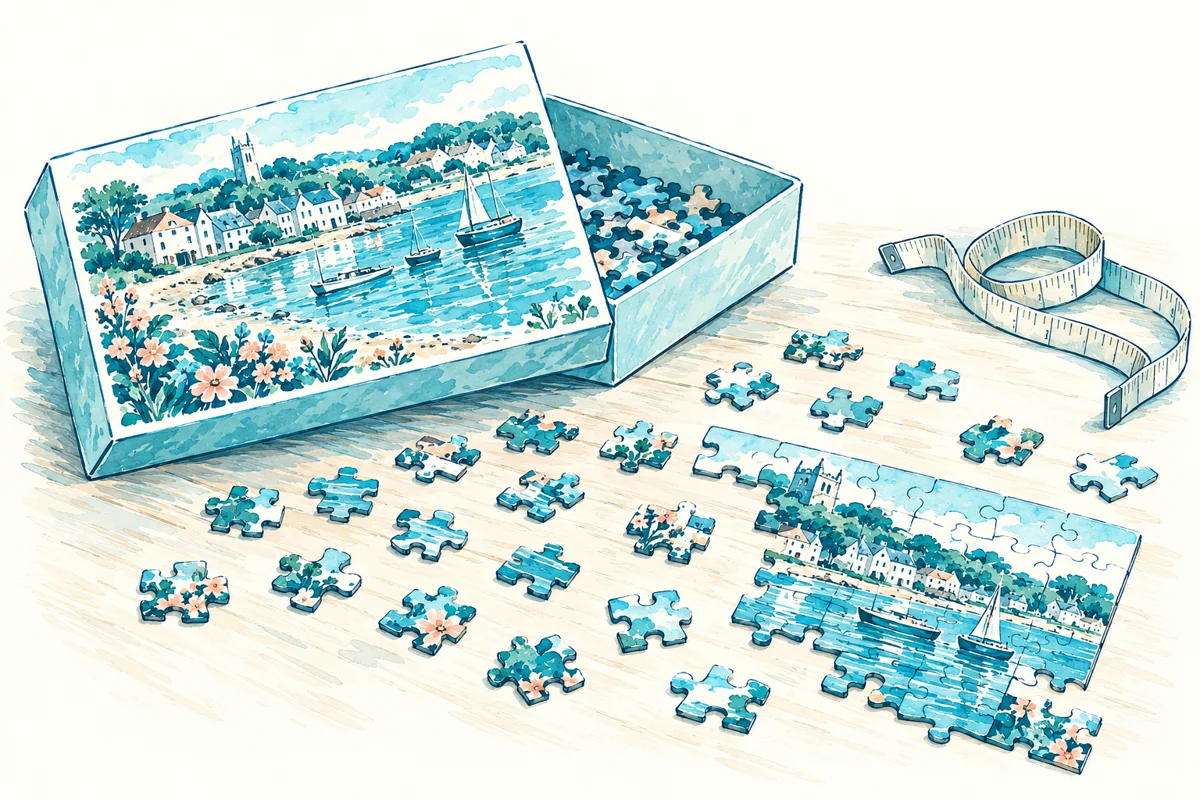
Will it fit your table?
Check the finished dimensions on the box, then measure your table or board. Leave room for sorting pieces and somewhere to put the box picture. Piece count alone won’t tell you how much space you need, especially with large-piece or panoramic puzzles.
If you need the table back between sessions, think about where the unfinished puzzle will go before choosing its size.
Flat 2D or 3D jigsaw puzzles?
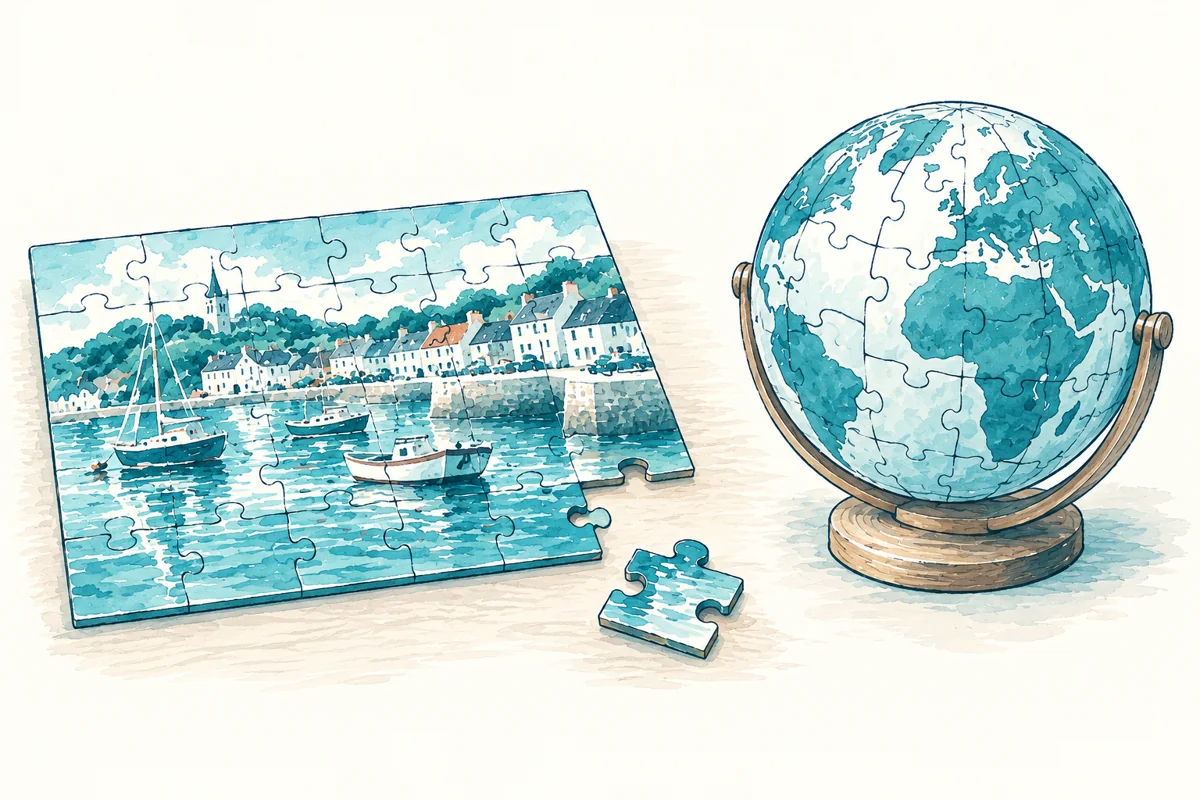
A 2D
A 3D
Wooden vs cardboard?
The first choice is which material?
Do you prefer wooden or cardboard?
If you are unsure, then choose a cardboard
Compare the prices and pictures available in both materials.
If you choose wooden, perhaps you are already a jigsaw
Wooden jigsaw puzzles can have great, unusually shaped pieces called whimseys.
What do you want to spend?
Set a comfortable budget and compare the total price, including delivery. Look at the picture, finished size, piece shapes and material together; a higher price doesn’t automatically make it the right puzzle for you.
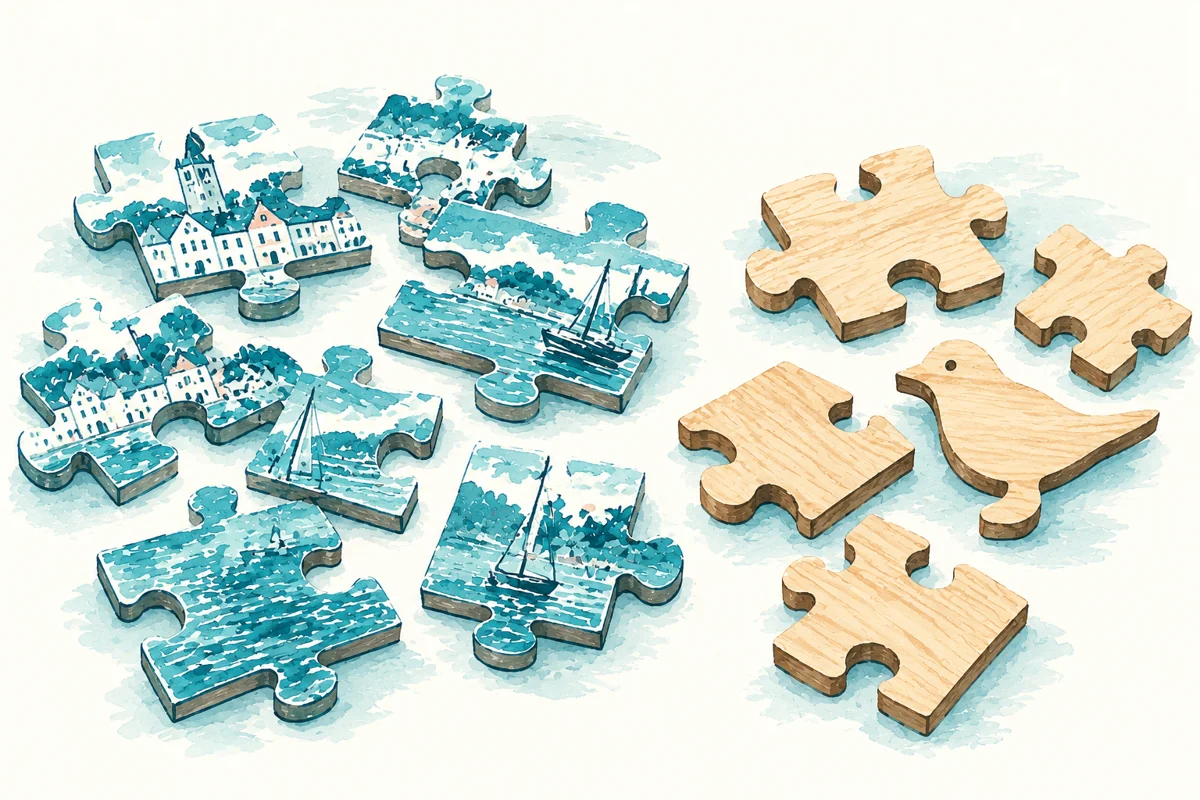
The material alone does not guarantee quality; compare the particular puzzle and price.
The best wooden jigsaw puzzles
Do have a look.
Choosing the best cardboard puzzles
What size of
Adult or kids puzzles
For children, check the age guidance and warnings on the particular puzzle, rather than choosing by piece count alone. Keep puzzles with small parts away from children under three.
I was involved in product testing children’s puzzles at Gibsons to ensure that individual puzzle pieces didn’t have weak points that could easily be twisted or bitten off.
For the puzzle you are buying, read its label and instructions. The CPSC’s toy guidance explains the age-label and small-parts advice.
Size of the puzzle piece
For adults, there are also different puzzle piece sizes. Some of us need to consider how easy the puzzle pieces are to handle.
Don’t assume that all 500- or 1,000-piece puzzles have the same sized pieces. Look for the actual piece dimensions or a life-size example on the box. “Large” and “extra large” describe a range, so compare the particular puzzles rather than relying on the label alone.
If handling small pieces is awkward, a large-piece puzzle may be worth trying. Check whether its pieces are comfortable for the person using it, as well as whether the finished puzzle fits the available space.
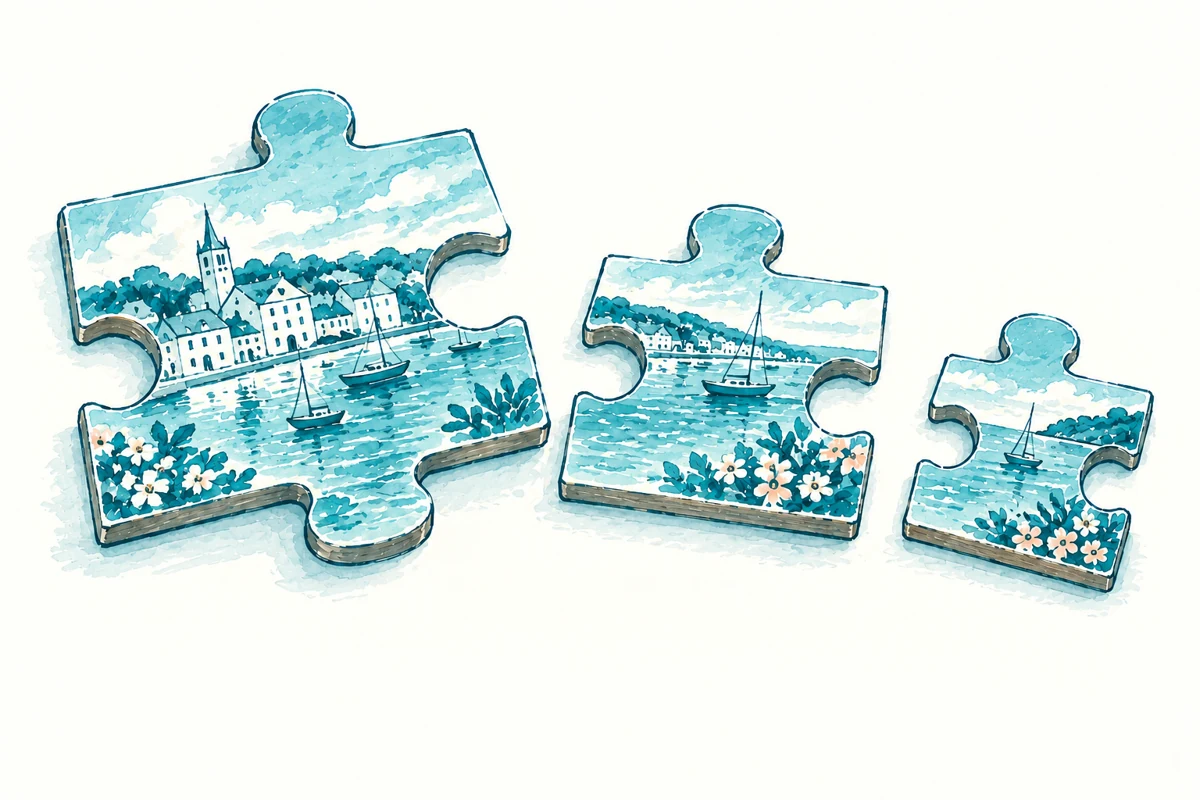
Illustrated sizes are not to scale. Check the actual piece dimensions for the puzzle you are considering.
Number of pieces
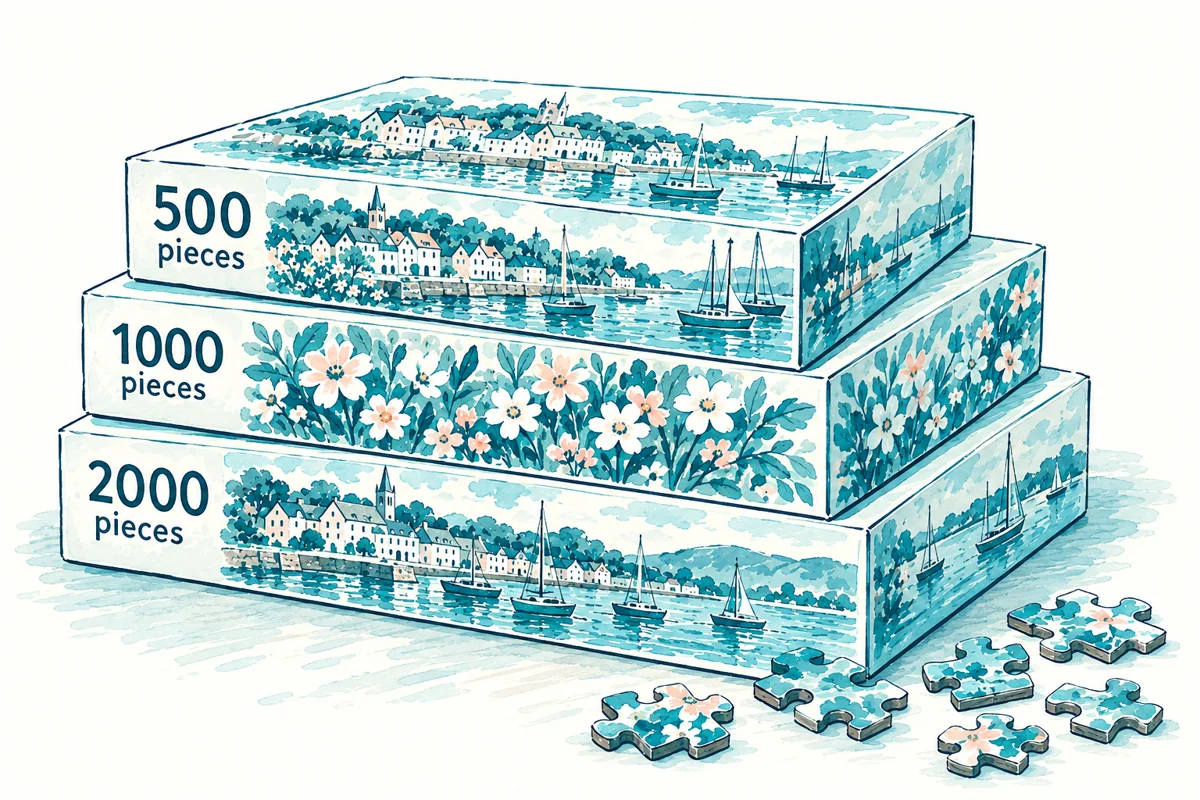
A 500-piece puzzle can be a good starting point, but there is no prize for choosing more pieces than you’ll enjoy! A smaller count may suit a shorter project; 1,000 pieces gives you more to sort and assemble.
Piece count is only part of the difficulty. Look at the composition too: a smaller puzzle with lots of plain sky can be more demanding than a larger one with plenty of distinct details.
Don’t assume that 1,000-piece puzzles get all the best artwork. Look for a picture you love at a piece count that suits you; publishers’ ranges and choices vary.
What makes a good quality jigsaw puzzle?
Puzzle brand
The next question could be which brand of
Buying a car, some people will have their favourite brand and only choose a Toyota, BMW or Mercedes.
The same applies to many puzzlers—they will stick with their favourite brand, whether that is Ravensburger, White Mountain or Gibsons for cardboard puzzles or Liberty, Wentworth, or Nautilus for wooden puzzles.
There are many reasons for sticking with the same brand. They may like the type of
Puzzle board quality
The puzzle quality does vary across brands, and the board is one part of that.
Special puzzle board can vary in thickness, stiffness and finish. Thickness alone doesn’t tell you how cleanly the pieces are cut or how well the printed paper is bonded. Look at the edges and surface as well as the stated thickness; board colour is not a quality guarantee.
Puzzle shapes & cut quality
Once the printed paper is ready, it can be glued to the puzzle board before cutting.
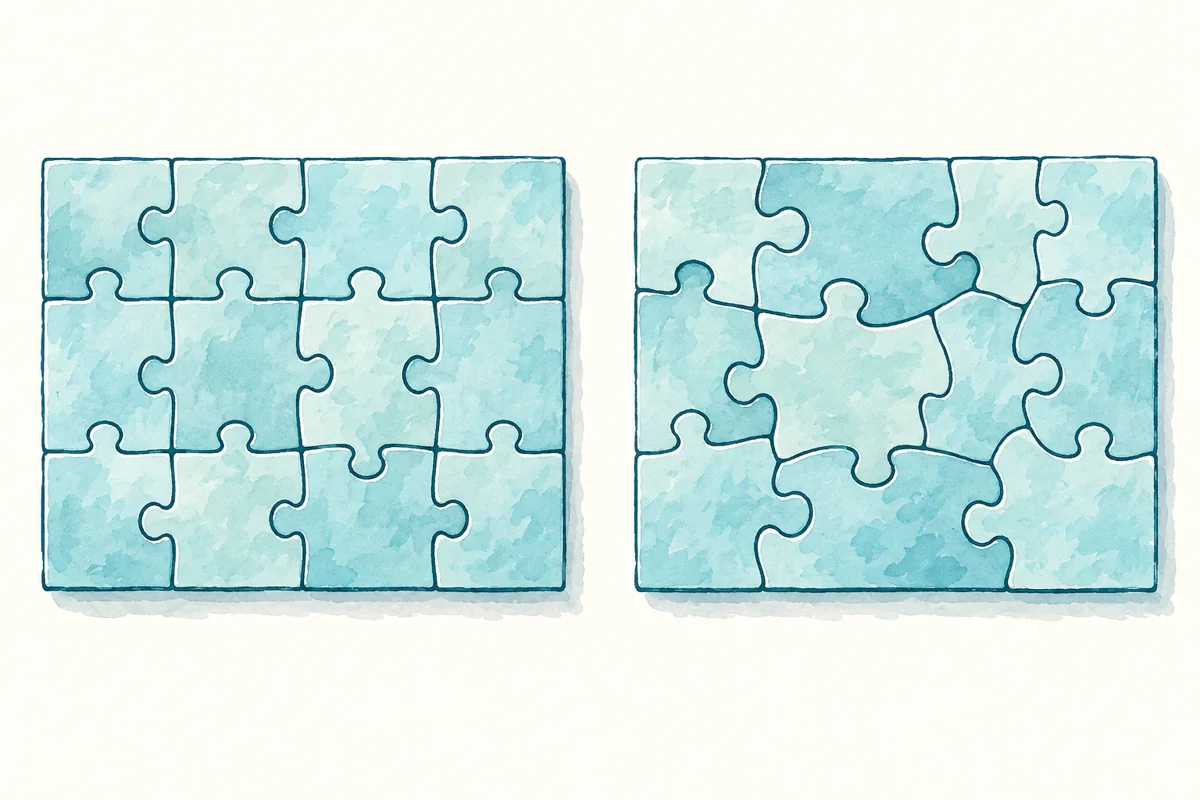
Puzzle cutting is both a science and an art.
The puzzle ‘cutter’ design is important. Some companies will have a regular pattern where each individual puzzle piece can look exactly the same. Similar-looking pieces can make it harder to spot a false fit.
Other companies will vary the design so each piece can have one, two or three ‘lugs’ or ‘holes’. A varied cut can help you distinguish pieces (although sometimes the difference is very small, so you could squeeze it into the wrong place if you wanted).
For me, variety in the puzzle shapes is part of the enjoyment.
Print quality
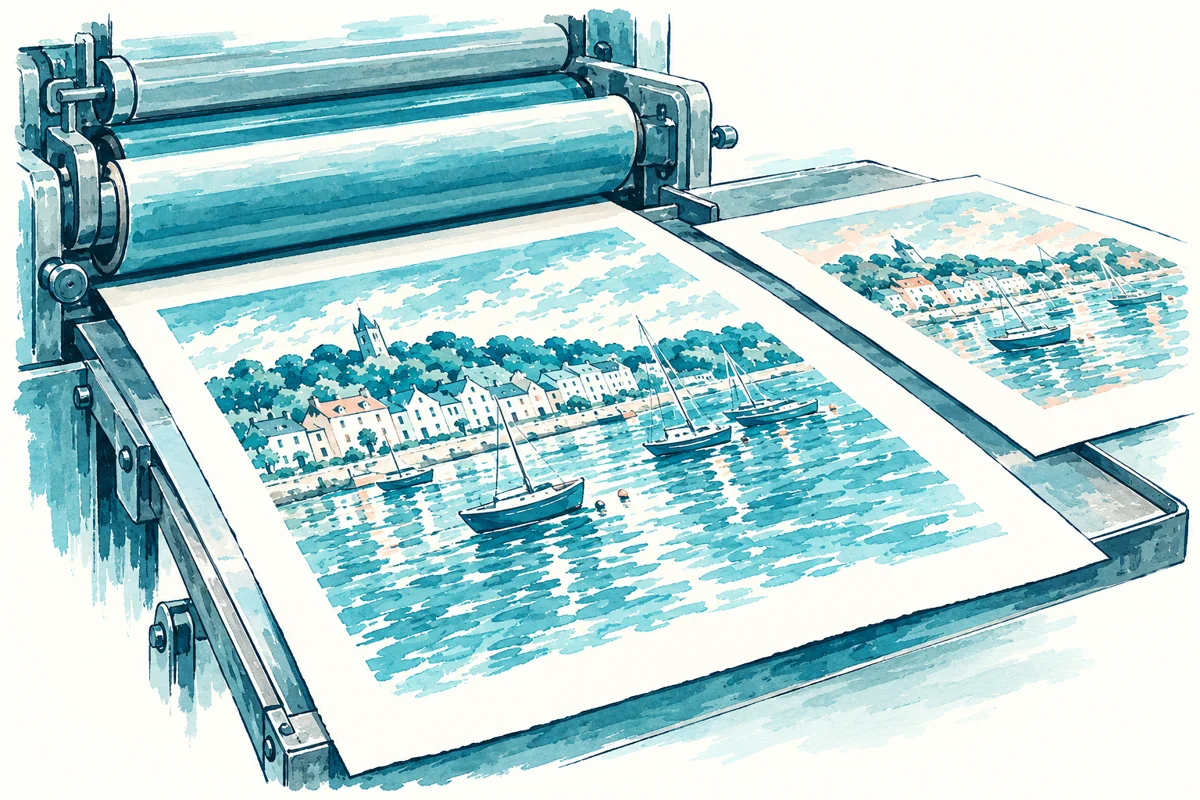
The print quality is a significant factor.
The paper’s whiteness affects how the printed colours appear; it is the background they are printed on.
A suitable paper surface helps control how the ink is absorbed. Too much absorption can dull the colour and lose detail.
If you have tried printing on grey recycled plain paper at home, you will see how flat the colours can be compared to specialist white-coated paper.
Paper and ink are important, and so are printing companies. They control how much ink goes onto the paper, and I have been lucky enough to oversee this process many times – making sure the colours are accurately reproduced with the best saturation and contrast. Even with the same image and printing machine, results can vary—the printer has to juggle the ink and press settings!
Original image quality
The print quality is important, but the stage before is equally important.
If the image is poor-quality to start with, it will become a poor-quality
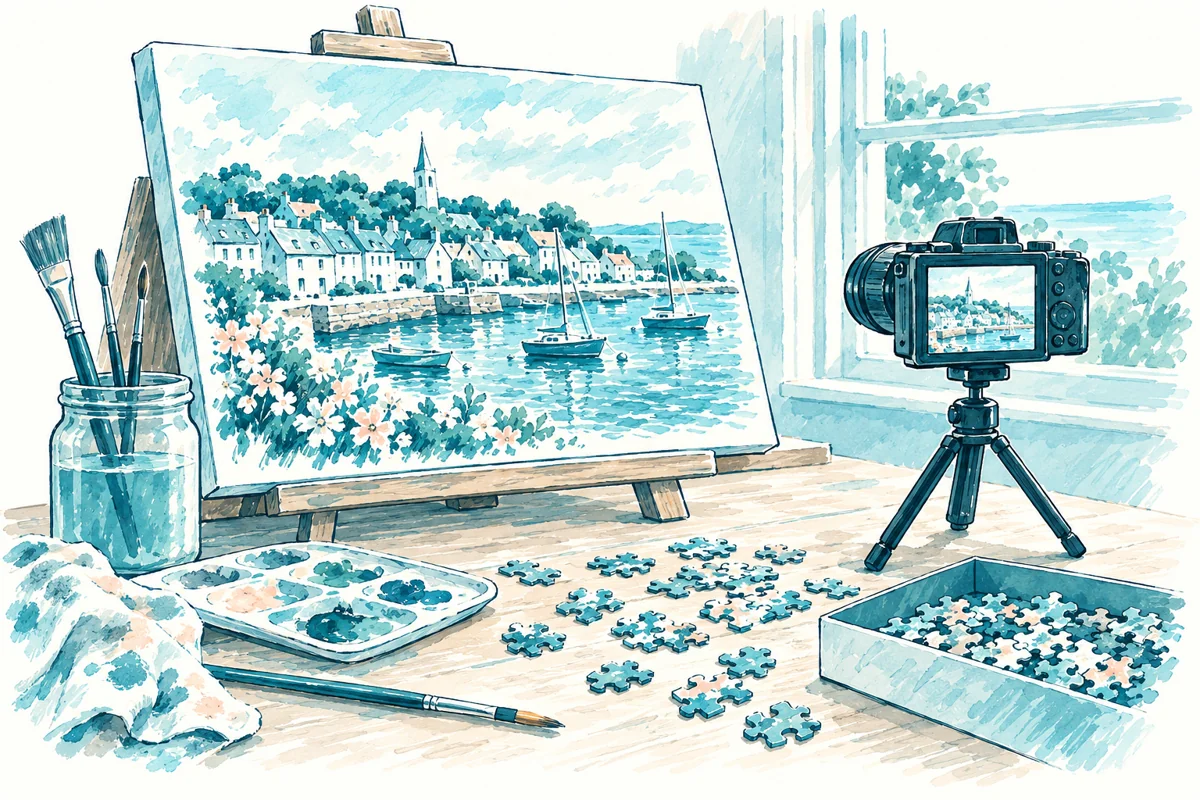
It all starts with the artist (or photographer). If the artist paints on a tiny 7 x 5cm canvas and the printer has to enlarge that to a 70 x 50cm
I always encouraged the painter to paint on as large a canvas as they could. Trevor Mitchell is a great example of a painter who knows exactly how important that is.
The painting then needs to be photographed or scanned. Again, the better the photographic equipment is at taking the highest original resolution pictures, the better the finished quality—sharper details and more accurate colours true to the actual painting. Just a note to any potential
The puzzle artist!
Puzzle subject
So, now we have the best painter with the largest canvas photographed by the best photographer with the best camera, printed by the best printer on the best coated paper with the best ink.
It’s still, however, not the best
The
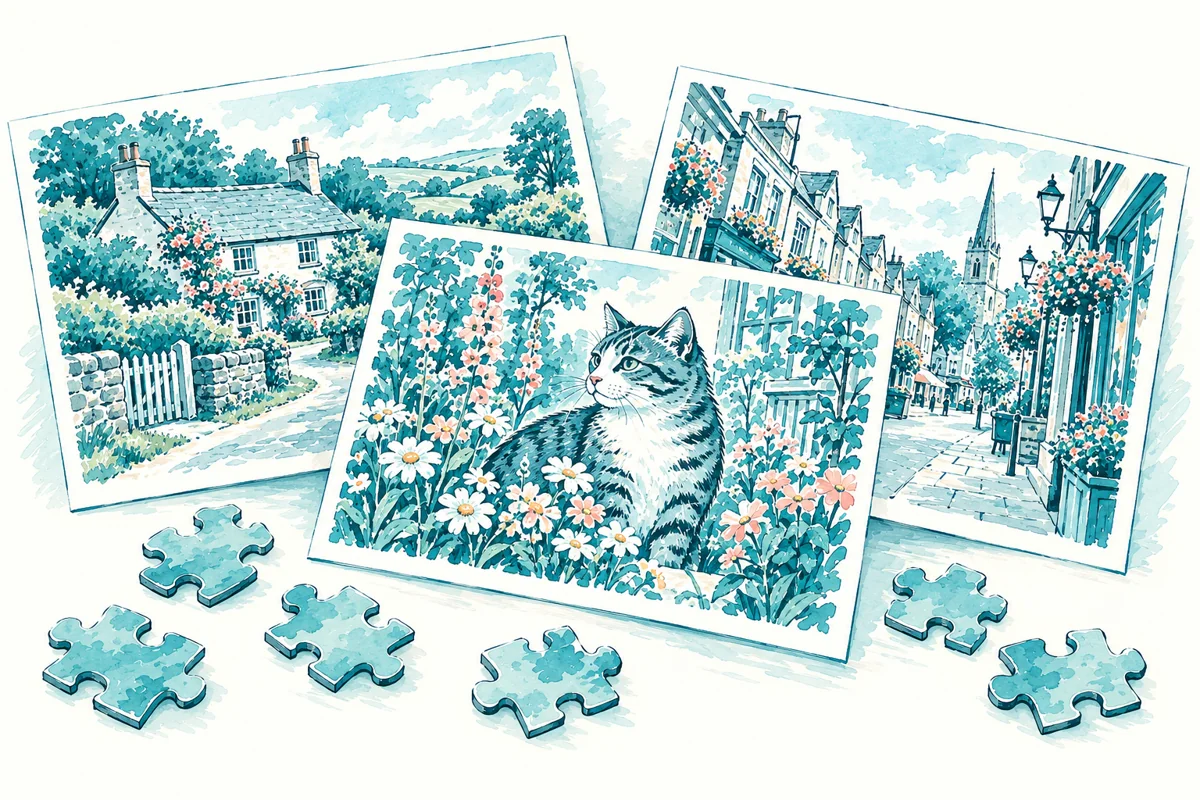
Only you can determine which pictures you like; nobody else can tell you otherwise.
You may only like cats, so the best
You may like peaceful country scenes of nature, so a busy street scene in New York is not for you.
Luckily, that is why thousands of puzzles exist on hundreds of different subjects.
Puzzle artist & style
Now we have the perfectly printed
Let’s pretend the
But you still don’t like the
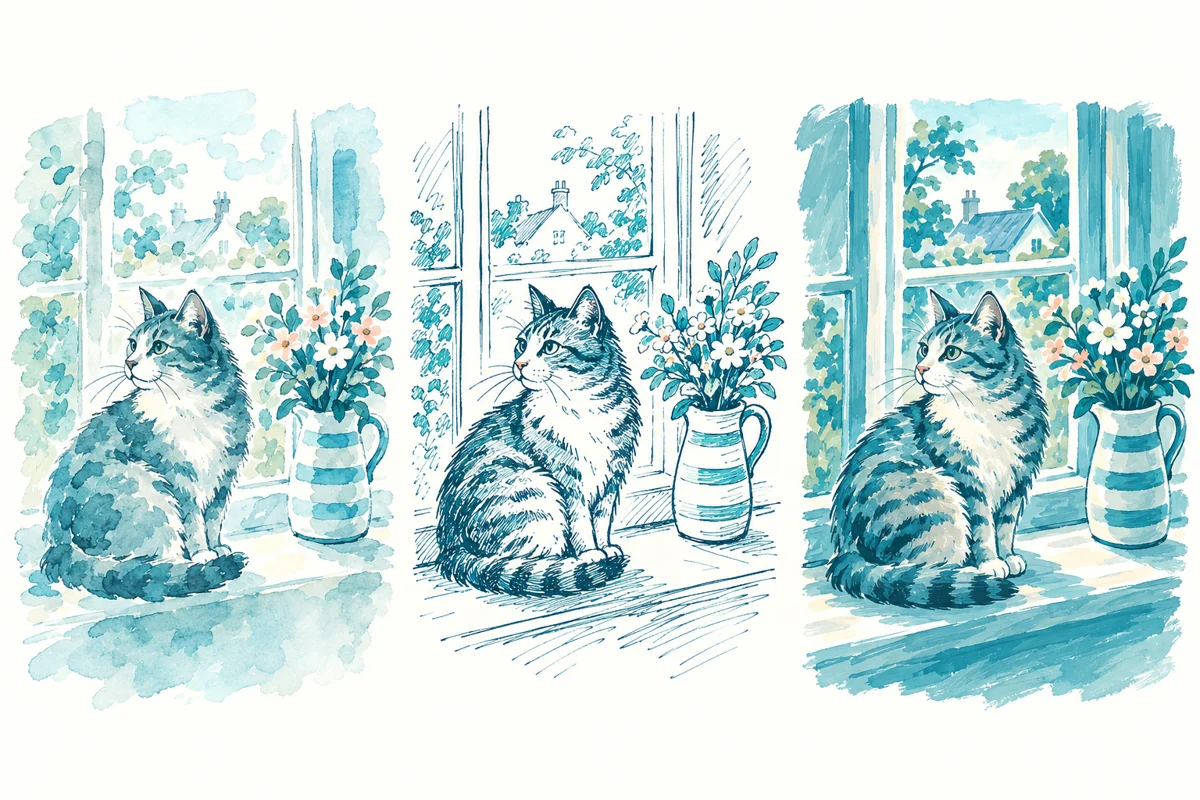
Different artists have different styles.
You may like photography or comic scenes as opposed to paintings?
You may like brightly coloured puzzles but the artist of the
Puzzle composition
Now we have the perfect
Puzzle composition.
The composition of a painting (or photograph) for a
For example, a
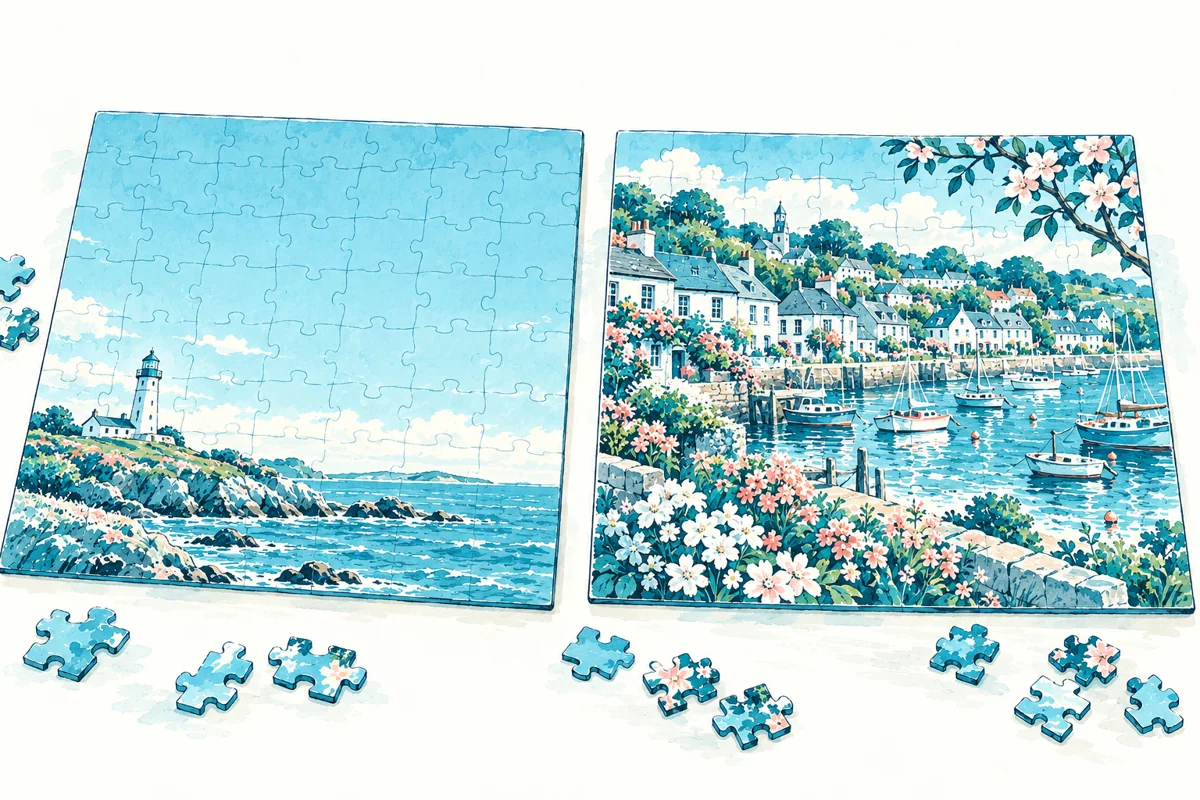
Some puzzlers may enjoy the challenge of having 90% of the
An easier, more interesting
Another example of a hard composition would be having lots of plain blue sky covering the top half of the
An easier composition of the sky would be to have it covering only a quarter of the
The more interesting the composition of a
Finally ... does the puzzle tell a story?
Nearly there … we have the perfect
What makes a puzzler pick that particular
A Great
What did Michael mean? Michael talks about an emotional connection with the puzzler.
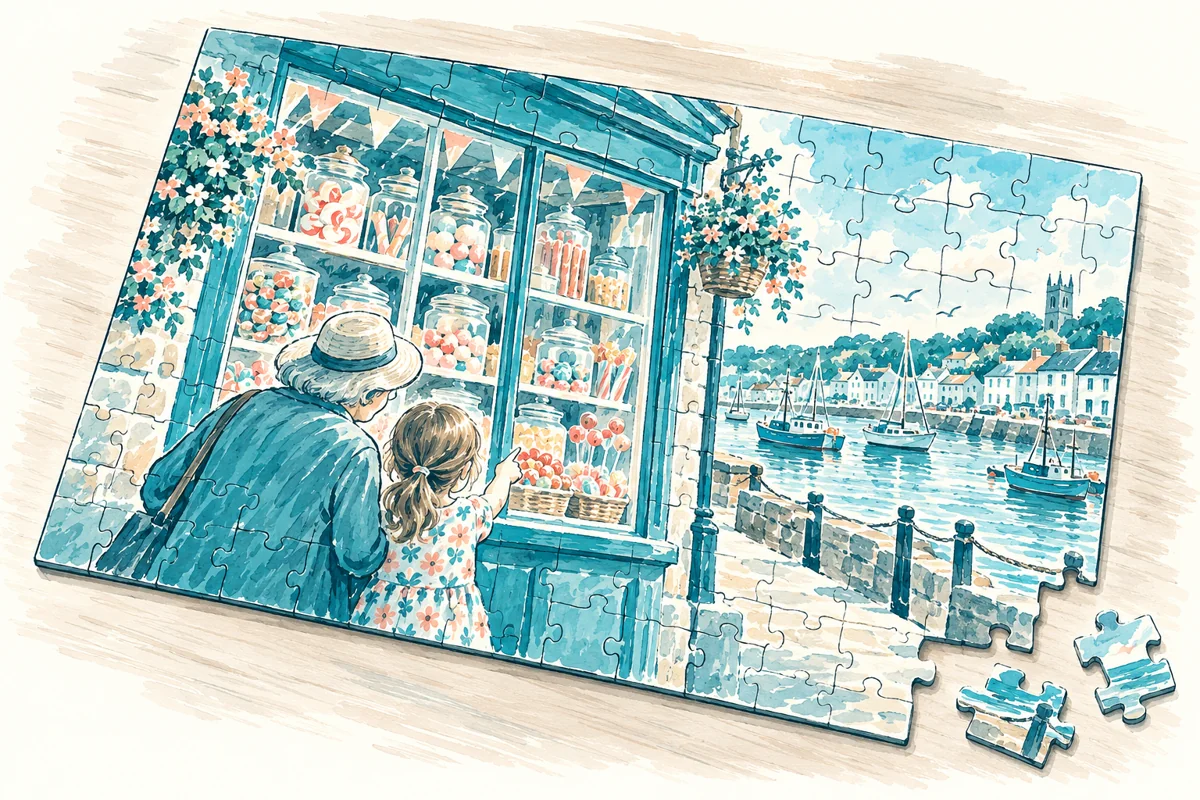
The best puzzles go beyond colours & composition. They say to a puzzler
Do you remember when …
… you used to visit this sweet shop?
… you went to this seaside town?
… you spent time in the garden with your grandparents?
… you played with your cats in the kitchen?
Now you have the best
A quick summary
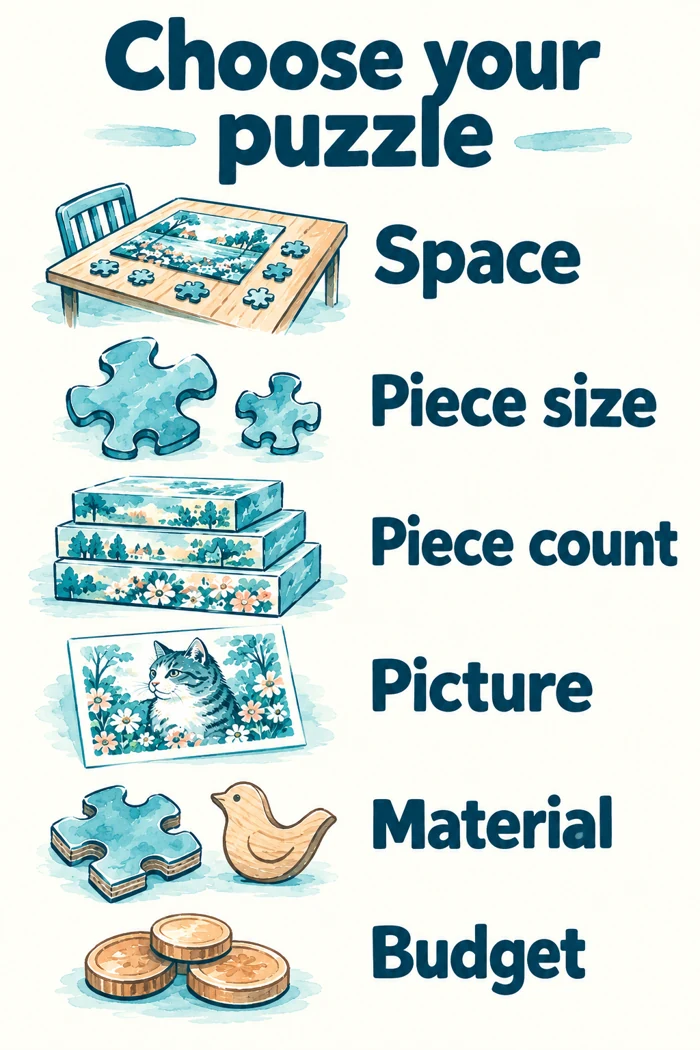
- Space — measure your table and check the finished puzzle dimensions.
- Piece size — choose pieces that feel comfortable to handle.
- Piece count — match the project to your patience, time and experience.
- Artwork — find a subject you enjoy, then look at the detail and difficulty.
- Materials — compare cardboard, wood and the kind of cut you like.
- Budget — compare the full price, including delivery.

